Football Characteristics in Different Regions of Africa: Physicality vs Technique and the European Influence

African football is not a single story. It is a vast library of contrasting identities, built by history, climate, culture, infrastructure, economics, and external influence.
The continent’s footballing map carries multiple dialects — from the controlled passing circuits of North Africa to the raw athletic storms of West Africa, the rhythm-based improvisation of Central Africa, and the growing tactical discipline in the Southern region.
One theme, however, connects them all: a balancing act between physical power and refined technique, increasingly shaped by European football philosophies.
African Football: A Tale of Power, Craft, and Adaptation
To understand African football, it helps to imagine it as a pendulum. On one side: physicality — speed, endurance, strength, and aggression.
On the other: technique — ball manipulation, dribbling, creativity, and football intelligence.
The swing of this pendulum differs by region, influenced by local training systems, cultural attitudes to sport, historical tactical exposure, and the developmental pipelines exporting talent abroad.
In the modern era, a third factor has emerged as a dominant force — Europe.
Professional academies, overseas coaching, tactical standardisation, video analytics, sports science, and early recruitment into European youth systems have fundamentally reshaped the African game.
Yet even as globalization blends styles, local identity remains vivid.
North Africa: The Empire of Structure and Technique

Core Profile
- Strongest traits: Tactical intelligence, technical precision, short-passing combinations, positional discipline
- Key weaknesses (relative): Physical dominance and aerial power compared to Sub-Saharan teams
- Biggest external influence: Southern European football (Spain, France, Portugal, Italy)
North Africa is the closest Africa comes to European football’s architectural approach.
The region’s football DNA is rooted in tactical order, clean build-up play, controlled possession, and cerebral pattern design.
Playing Style Identity
North African teams prioritise:
- Ball retention under pressure
- Structured build-up from defence
- Midfield control over transitional chaos
- Technical goalkeeper distribution
- Game management with calculated risk
It is football built on control, not chaos.
Tactical Traits
Build-up play:
- Short passes from defence
- Patience in progression
- Midfielder dropping deep to receive
- Fullbacks often inverted or highly involved in possession
Attacking mechanics:
- Winger-driven creativity
- Overloads in half-spaces
- One-two combinations on the edge of the box
- Less emphasis on cross duels, more on cutbacks and angled passes
Physical vs Technical Balance
North Africa does not lack physicality, but historically it is the least physical region on the continent when assessed against West or Central Africa.
Gym conditioning, diet science, and pro-level athletic training are improving this, but technique remains the defining signature.
European Influence
- French and Spanish club academies heavily shape Morocco, Algeria, Tunisia
- Italian tactical discipline historically strong in Tunisia and Egypt
- French dual-nation youth systems funnel players back into national team pipelines
Case Examples: Morocco’s 2022 World Cup semi-final blueprint, Algeria’s 2019 possession-meets-transitions balance, Egypt’s structured defensive compactness.
West Africa: The Kingdom of Raw Athleticism

Core Profile
- Strongest traits: Speed, strength, aerial dominance, transition power
- Key weaknesses (relative): Tactical structure, controlled tempo, game management
- Biggest European influence: England, France, Belgium
West Africa plays football like wildfire. It spreads fast, burns intense, and often overwhelms opponents through physical superiority.
Playing Style Identity
- Explosive counter-attacks
- Wide players isolated for 1v1 advantage
- Direct progression over slow possession
- Physical duels embraced, not avoided
- High defensive engagement and aggressive pressing
West African football is event-driven, not possession-driven.
Tactical Traits
Off the ball:
- Frontline pressing rather than mid-block patience
- Central defenders comfortable defending large spaces
- Defensive recovery relying on pace, not structure
Attacking principles:
- Early forward passing
- Long diagonal switches
- Encouragement of individual duels
- Strikers built for power and chaotic box moments
Physical vs Technical Balance
This region leads Africa in:
- Sprint capacity
- Vertical leaps
- Shoulder-to-shoulder duels
- Ground-coverage rates
Technical development has improved significantly due to academy influence, yet physical assertiveness remains the competitive identity.
European Influence
- French academies sculpt players from Senegal, Mali, Ivory Coast, Guinea, Burkina Faso
- English football influences Ghanaian and Nigerian player development, especially in duels and pace-driven play
- Belgium’s scouting networks transformed West African export pathways
Case Examples: Nigeria’s athletic dominance, Senegal’s hybrid model under modern organisation, Ghana’s transition football identity, Mali’s youth tournament supremacy.
Central Africa: The Playground of Flair and Unpredictability

Core Profile
- Strongest traits: Close control, flair, 1v1 creativity, instinctive dribbling
- Key weaknesses (relative): Tactical structure, defensive discipline
- Biggest European influence: France and Portugal
Where West Africa overwhelms with power and North Africa wins with structure, Central Africa intoxicates with improvisation.
Playing Style Identity
- Football by instinct rather than instruction
- Frequent use of step-overs, feints, body swerves
- Players often escape pressure without passing
- Creativity prioritised over tactical symmetry
Technical Traits
On the ball:
- Low centre-of-gravity ball manipulation
- Tight-space turns
- Constant dribble-first mentality
- Minimal fear of confrontation zones
Off the ball:
- Less rigid tactical spacing
- Transitions can be chaotic but electric
- Defending often reactive rather than pre-organised
Physical vs Technical Balance
Central Africa has physical strength but is most technically expressive in individual ball guile outside North Africa.
European Influence
- Portuguese clubs have accelerated development, particularly for Angola, DR Congo, Cameroon
- Ligue 1 recruitment has shaped technical refinement without suppressing dribbling identity
Case Examples: Cameroon’s hybrid of power and unpredictability, DR Congo’s dribbling culture, Gabon’s transition speed.
East Africa: The Emerging Tacticians and Transition Thinkers

Core Profile
- Strongest traits: Work rate, movement intelligence, rapid improvement
- Key weaknesses (relative): Physical dominance and elite technical depth
- Biggest European influence: Scandinavia, Germany, United Kingdom
East Africa has historically lagged behind other regions at elite level, but is currently Africa’s fastest-improving football region relative to infrastructure growth.
Playing Style Identity
- Structured build-up, increasingly tactical
- Discipline emphasised over individual flair
- High collective running output
- Team cohesion over individual star reliance
Physical vs Technical Balance
They do not dominate physically like West Africa nor technically like North Africa, so they compensate with:
- Tactical discipline
- High tempo collective movement
- Commitment to systems over spontaneity
European Influence
- Scandinavian coaching models adopted in Kenya and Uganda
- German tactical schooling visible in coaching imports
- British youth development shaping physical conditioning and pressing structure
Case Examples: Uganda and Kenya’s tactical shift, Tanzania’s rising technical investment, Ethiopia’s possession ambitions.
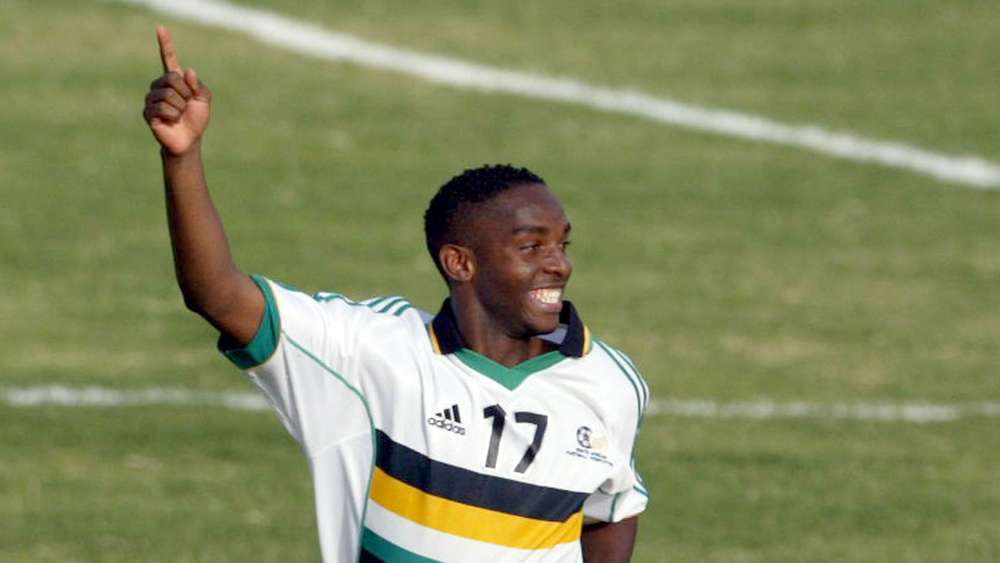
Southern Africa: The Fusion of Groove and System
Core Profile
- Strongest traits: Combination play, first-touch sharpness, rhythm football
- Key weaknesses (relative): Aerial dominance and physical duel win rates
- Biggest European influence: Netherlands, England, Portugal
Southern Africa plays football like music — rhythmic, coordinated, and reliant on timing.
Playing Style Identity
- Quick passing triangles
- Preference for combination play over direct progression
- Midfield rotations and technical circulation
- Football built on connection rather than collision
Physical vs Technical Balance
The region is moderately physical but leans technical, prioritising:
- One-touch passing
- Compositional build-up
- Movement choreography
- Midfield control
European Influence
- Dutch possession templates influence South Africa’s football schooling
- English conditioning and Premier League exposure ramps up physical expectations
- Portuguese coaching has shaped Link-play development in Angola and Mozambique
Case Examples: South Africa’s possession approach, Zambia’s creative midfield traditions, Zimbabwe’s raw but technical blend.
The European Gravity on African Football
The Pillars of Influence
Europe’s impact is not accidental — it is structural.
1. Early talent migration
African prospects move to Europe younger than ever. Many receive their football education abroad, not locally.
2. Tactical standardisation
Modern football is coached through patterns, principles, and modelled build-up structures. Europe exports this framework to Africa.
3. Sports science dominance
Gym conditioning, GPS tracking, sprint profiling, intake monitoring, sleep science, and recovery protocols are reshaping the physical archetype.
4. Pressing, counter-pressing, and position play
These concepts — once foreign in most African youth academies — are now baseline expectations.
5. Game intelligence over spontaneous chaos
The biggest evolution is mental: decision speed, space recognition, and risk calculation.
The New African Footballer Prototype
The modern African player is less defined by stereotype and more defined by hybridisation.
| Era | Identity |
|---|---|
| 1980s–1990s | Raw talent, power, unpredictability |
| 2000s | Transition monsters, physical elites |
| 2010s | Tactical integration begins |
| 2020s | Hybrid footballers blending power, IQ, refinement |
The most valuable African player today is:
- Physically elite
- Technically clean
- Tactically drilled
- Versatile in multiple systems
- Capable of absorbing high data-driven coaching input
The Future: Convergence Without Identity Loss
Africa’s football regions will grow closer in tactical philosophy, but they will never lose personality.
The future trend lines are clear:
✅ More locally built academies adopting European frameworks
✅ Technical development starting earlier in grassroots stages
✅ Athletic advantages refined, not replaced
✅ Rising game intelligence and analytical coaching literacy
✅ Creative instincts preserved, structured by modern game models
Conclusion: Different Roads, One Football Future
African football is not about choosing between physicality or technique — it is about harmonising both.
North Africa will continue to refine possession and tactical framework. West Africa will evolve its athletic strengths into structured pressure systems.
Central Africa will polish flair without losing spontaneity. East Africa will grow through intelligent team systems.
Southern Africa will expand its rhythmic passing identity into tactical efficiency.
Europe changed African football, but Africa is now changing European football too — through athletic profiles, transition speed, attacking unpredictability, and technical individuality.
The continent’s future is not imitation.
It is evolution with identity intact.