Unveiling Sunderlands Winning Strategies in Their Strong Premier League Kickoff

Potential Rise in the Premier League
If Sunderland triumph against Everton on Monday, they will leap from seventh to second place in the Premier League, trailing leaders Arsenal by just five points. With a third of the season already played, the Black Cats find themselves unexpectedly contending for a Champions League spot, a scenario few anticipated at the season’s outset.
So, what strategies have manager Regis le Bris and his revamped Sunderland squad employed to become one of the season’s standout performers? This analysis will delve into their tactical approach on both ends of the pitch, exploring the secrets behind their early success.
Defensive Tactics: Out of Possession
Sunderland’s tactical flexibility is prominently displayed in their approach when not in possession. While they’ve proved challenging to break down, their defensive prowess does not rely solely on a deep defensive line.
Le Bris encourages an aggressive pressing style from the outset, often employing a man-to-man press that has yielded impressive results. Newly-promoted teams typically shy away from this method due to its inherent risks, where missteps can lead to significant vulnerabilities. Nonetheless, Sunderland’s bold decision to embrace this high-pressing strategy has paid dividends since their promotion.
During their 2-1 victory over Chelsea on October 25, their high press constrained Chelsea’s build-up play, pushing them toward less effective left-side options due to the absence of a left-footed central defender. Sunderland’s approach targets opponents’ goal-kicks with intense pressing and synchronizes their team movements to capitalize on backpasses as a trigger to advance defensively.
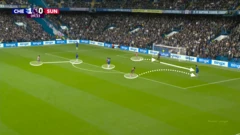
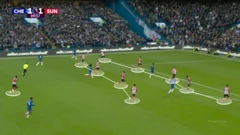
As the match progresses, Sunderland can revert to a more zonal defensive method, adopting a 4-4-2 shape to block spaces when deeper in their half. This duality in defensive strategies showcases their adaptability, as seen in matches against Chelsea and Manchester United. By deploying a back five in deeper formations, they maintain defensive strength, and their players exhibit the capability to switch between different defensive styles seamlessly.
In these scenarios, defenders do not strictly adhere to zonal marking but actively engage their immediate opponents to minimize the ball time and options. When the ball enters the penalty area, Sunderland’s central defenders, alongside goalkeeper Robin Roefs — who has the league’s best record in preventing goals based on expected goals (xG) — demonstrate robustness in one-on-one defensive duels.
Offensive Strategies: In Possession
When Sunderland assumes control of the ball, their tactics lean towards a positional style, with players strategically occupying defined zones. While there is room for rotation among players in these spaces, consistent occupation ensures effective buildup.
From the back, Sunderland typically builds play through their defenders and midfielders, creating width in their back four while the goalkeeper holds a position between the two center-backs. Granit Xhaka and Noah Sadiki often make runs from central midfield to support the buildup.
However, Sunderland is not hesitant to employ long passes, often targeting Wilson Isidor during challenging pressing situations.
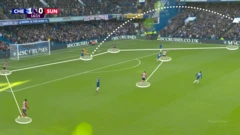
Upon establishing possession, the focus shifts to breaking down opposing defenses. Central midfielders strategically drop back to receive the ball under favorable conditions, allowing them to orchestrate the play more effectively. Xhaka, with time to analyze, can switch play accurately to wingers to create one-on-one opportunities.
Omar Alderete, a recent addition from Getafe, stands out as one of the most incisive passers among defenders, consistently turning recoveries into progressive moves upfield. His shrewd passing style, characterized by deceptive movements, has significantly contributed to Sunderland’s advancement this season.
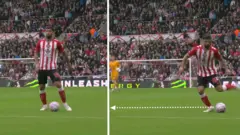
In the attacking phase, Sunderland emphasizes crossing opportunities from the flanks, relying on full-backs to provide support through overlapping or underlapping runs. This creates dynamic attacking triangles, increasing their unpredictability.
Xhaka often joins the flanks, positioning himself for quick first-time crosses after receiving lay-offs. The versatility of Trai Hume on both wings significantly enhances their attacking options, as he adapts seamlessly from defensive to offensive positions during matches.
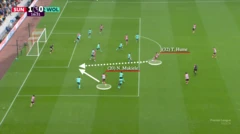
In situations where Sunderland holds a lead, they adjust their pressing intensity and settle into a deeper block. Given their capable ball-carriers, they can relieve defensive pressure while also threatening with long passes toward strikers. Furthermore, Sunderland has incorporated set-pieces effectively into their strategy, generating scoring opportunities through well-executed corner kicks, free-kicks, and long throws.
Strategic Overview and Future Outlook
While this analysis separates the phases of play, Le Bris envisions a cohesive system where his players view themselves as part of a unified strategy rather than individual components. Sunderland’s awareness of defensive responsibilities when in possession ensures a robust counter-attack to any potential turnovers.
As they sit within the table’s upper echelons, Sunderland’s performances reflect their balanced and methodical approach. Their ability to transition between various setups — whether pressing high or defending deeply — demonstrates their adaptability and tactical sophistication.
Such strong performances underscore their promising position this season, making Sunderland a team to watch closely in the Premier League.