Understanding VARs Role in Select Penalties: When It Steps In and When It Doesn’t
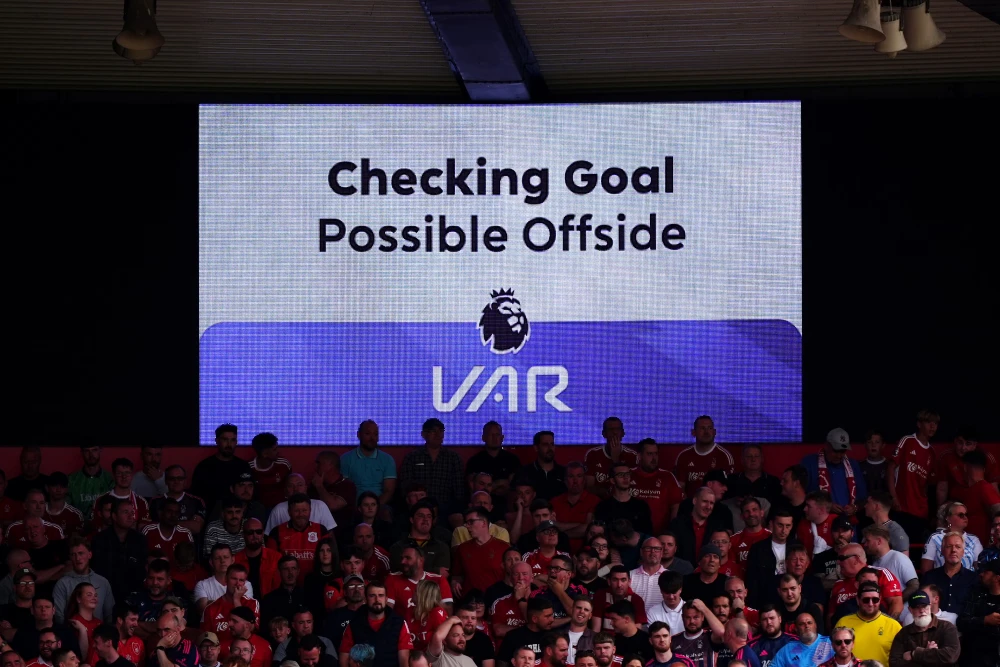
A Weekend of VAR Decisions in the Premier League
This past weekend showcased a series of penalty calls involving the video assistant referee (VAR) in the Premier League, with various penalties being awarded, rescinded, and left unaddressed. Criticism often arises regarding VAR’s inconsistency. However, it’s crucial to recognize that VAR’s objective is not to standardize decisions but to assess specific situations based on the referee’s initial judgment. Understanding what VAR evaluates can clarify the outcomes of seemingly similar situations.
Why a Minor Contact on Doku Led to a Penalty
In the ninth minute, Jeremy Doku entered the penalty area and stumbled while trying to advance the ball past Liverpool’s goalkeeper, Giorgi Mamardashvili. Referee Chris Kavanagh allowed play to proceed initially but was prompted by VAR, overseen by Michael Oliver, to review the incident on the monitor. The penalty was given, although Mamardashvili saved the shot from Erling Haaland.
The contact between Doku and Mamardashvili was minimal, raising questions about the decision. Typically, such slight contacts do not result in penalties. However, VAR considers how the attacking player reacts to the contact — referred to as “contact with consequence”. In this case, Doku’s effort to remain on his feet and shoot rather than merely seeking a foul indicated to VAR that the contact genuinely affected his ability to play the ball. This decision, though controversial, was backed by the referee’s assessment of the incident.
The Case Where Ouattara Did Not Receive a Penalty
In sharp contrast, Dan Burn’s challenge on Dango Ouattara did not result in a penalty, leading to a caution for Ouattara, who was deemed to have simulated the contact. The key difference lies again in the “contact with consequence” aspect. While Doku’s fall appeared to be a natural reaction to contact, Ouattara’s dramatic fall was seen as an attempt to deceive the referee, which worked against him during the review.
Comparing this to a penalty given to Arsenal earlier in the season, where a slight touch did not warrant a penalty according to the Premier League’s key match incidents (KMI) panel, highlights how subjective these decisions can be. They ruled that the referee’s original penalty award was incorrect, showing a lack of consensus on minor contact situations, much to the frustration of fans.
When Can VAR Overturn a Yellow Card?
While it’s commonly stated that yellow cards are not subject to VAR review, there are exceptions. A recent instance involved Brighton’s Georginio Rutter, who was booked for diving after initiating contact with Crystal Palace’s Jaydee Canvot. Since there was no actual foul committed, the VAR rectified the penalty decision, overturning it.
However, VAR can only assess yellow cards for simulation if they suspect foul play that deserves a penalty. In Ouattara’s situation, the VAR could not overturn his booking as it was not tied to a potential penalty.
In a notable example from earlier this season involving Fulham’s Josh King, the match officials unanimously voted against awarding a penalty on the field and through VAR. There are plans to make second bookings subject to review in the future, creating an inconsistency where a player could have a second yellow rescinded while a first remains unchanged.
In addition, other circumstances exist where a yellow card can be dismissed, such as when a player is cautioned for a foul leading to a cancelled penalty. Would Burn’s penalty have been revoked, he would have avoided a second yellow card as well.
In conclusion, while VAR is intended to clarify contentious penalty incidents, its application often leads to complex interpretations that leave fans divided.