Unai Emery: Aston Villa Transitions From Monochrome to Vibrant in Just Three Years
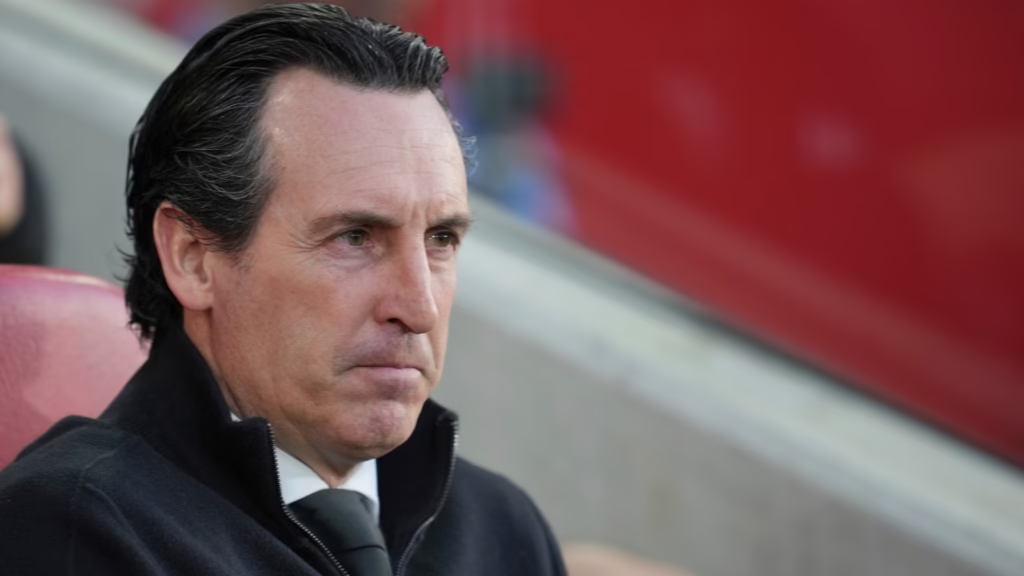
A Memorable Debut for Emery
On November 6, 2022, the atmosphere at Villa Park was electric as Aston Villa triumphed over Manchester United—an achievement not witnessed at home since 1995. This victory marked a triumphant start for Unai Emery as the club’s new head coach, occurring shortly after the clearance of work permit issues that had postponed his appointment.
The long-awaited celebration suggested a shift in fortunes for Aston Villa, as they appeared to emerge from a prolonged period of challenges. In the locker room post-match, excitement abounded as players exchanged handshakes and celebrated together, hinting that a new era had begun for the club, often referred to as a sleeping giant.
However, despite the joyous occasion, Emery maintained a pragmatic view. He recognized that while the victory was significant, it came about through a style of play that did not align with his vision. The game had been fast-paced and frenetic, in stark contrast to the controlled and tactical approach he sought to implement. Emery knew he had to convince players, staff, and fans alike that his methodology was the way forward. Remarkably, three years later, he remains at the helm.
Emery’s Path to Aston Villa and Near Departure to Newcastle
Upon his arrival at Aston Villa, Emery faced a daunting challenge. The team languished in 16th place in the Premier League, just above the relegation zone. Emery, however, possessed the resilience to confront adversity. A serious knee injury during his playing days cut short his career, but it was the catalyst for his managerial journey, leading him to secure promotion with his first club, Lorca Deportiva.
Following stints that saw him rise through the ranks at Almeria and Valencia—including three consecutive Europa League titles with Sevilla—Emery’s long-term aim led him to the Premier League. Despite an initial promising tenure with Arsenal, which ended in his dismissal after a dismal run of form, he found redemption at Villarreal, where he claimed his fourth Europa League title during a momentous final against Manchester United.
Months later, following Newcastle’s takeover, the club expressed interest in hiring Emery as their new manager to replace Steve Bruce. Frustrated by the lack of direct communication, he told an agent that the club needed to speak to him directly. This message was conveyed, eventually reaching Newcastle’s representatives, who invited Emery to take the reins. Although intrigued, discussions around contract details stalled, and Emery faced awkward questions about the potential move shortly after guiding Villarreal to a Champions League victory. Ultimately, he decided to stay at Villarreal, motivated by the opportunity to make further contributions there.
Time to Revitalize the Team
Though Emery’s dismissal from Arsenal was disappointing, it left him with a sense of unfulfilled potential in the Premier League. He learned from his experiences the importance of surrounding himself with a dedicated support network. When Nassef Sawiris, co-owner of Aston Villa, convened a meeting with Emery, he sought a new direction rather than merely offering a role.
Impressed by the opportunity, Emery recognized the dire situation at Villa. The club’s decision to pay the release clause in his contract with Villarreal enabled his transition, with both parties announcing the change on October 24, 2022. Embracing his new position, he immediately sought to bring trusted colleagues onboard to help facilitate his vision.
Emery envisioned a structure built around individuals who shared his football philosophy, essential for driving the project effectively. His commitment drew his close associate Damian Vidagany to join him in this undertaking, reinforcing the culture necessary to ignite success.
Immediate Actions at Villa
Upon his arrival, Emery met his squad in the gym, flanked by his ten assistants. He recognized the significance of first impressions, particularly as a former player. Trying to communicate his emotions regarding the club, he shared his sadness over Steven Gerrard’s departure and emphasized that players shared responsibility for the team’s previous struggles.
He made it clear: he did not come to Aston Villa to squander the opportunity but to achieve success. Emery’s training sessions unveiled patterns that needed correcting, pointing out that actions needed to be more strategic; crossing the ball should represent a calculated pass rather than random attempts.
As players navigated through these adjustments, some found it challenging while others embraced the transformation. The team’s senior members, including Emi Martinez and Ollie Watkins, quickly adapted to this change. This enthusiasm for Emery’s approach spread throughout the squad, leading to the sentiment that this evolution shifted the club from “black and white football to full color.”