The Secret Behind Shakhtars Continued Recruitment of Brazilian Players During the Ukraine Conflict
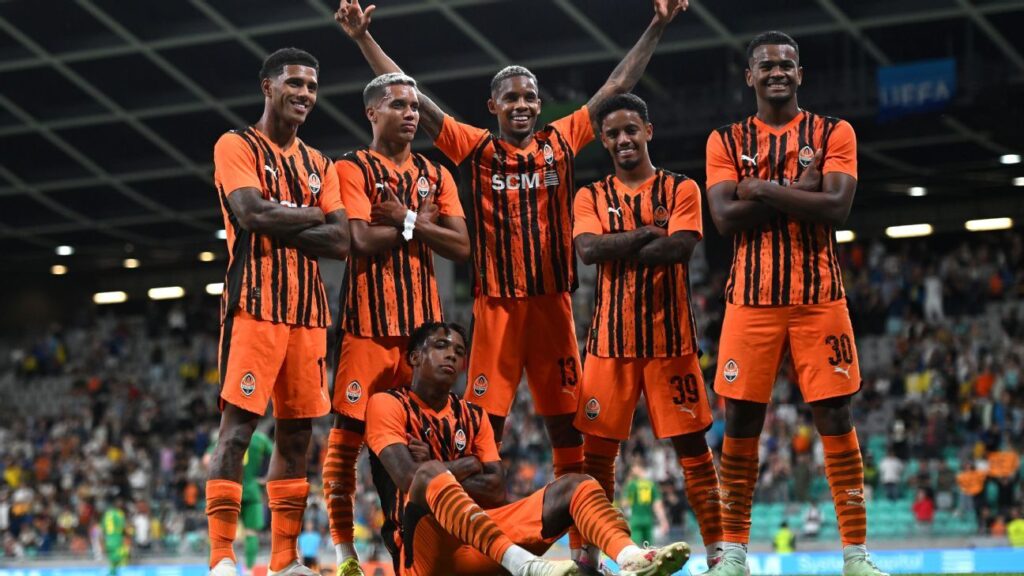
Shakhtar Donetsk’s Ongoing Struggle Amid War
A Daily Reality
Darijo Srna, sporting director of Shakhtar Donetsk, reflects on the unsettling experiences his team has faced since the onset of Russia’s invasion of Ukraine. He recalls moments when players and staff had to gather in the hotel lobby, waiting anxiously for alerts about drone strikes and preparing to rush to air-raid shelters. This situation unfolded on a matchday, where they remained in the lobby until dawn before managing to sleep briefly before a game. “It’s part of our life now,” he stated.
As of now, the conflict marks four years since it escalated with Russia’s full-scale invasion on February 24, 2022. According to The Center for Strategic International Studies (CSIS), the death toll has reached upwards of 140,000 Ukrainians and 325,000 Russians, making this one of the deadliest conflicts since World War II. Furthermore, the UN High Commissioner for Refugees estimates that around 5.9 million Ukrainians have fled the country.
Club’s Resilience and Strategy
Despite these daunting realities, Shakhtar has devised a survival plan that heavily relies on acquiring young talent from Brazil through the transfer market. This approach has its roots in a philosophy established over 20 years ago by Shakhtar’s president, Rinat Akhmetov, who admires Brazil’s distinctive football style. This led to the creation of strong ties in Brazil, facilitating a steady influx of players who later ascend to prominent European clubs.
Notable alumni include Willian, Fernandinho, Douglas Costa, Fred, and Luiz Adriano, all of whom have successfully transitioned to well-known teams in Europe. Recently, winger Kevin made a lucrative move to Fulham for €40 million, setting a record transfer for the Premier League club.
According to club sources, Shakhtar has recruited 47 Brazilian players since 2002, who collectively have scored over 1,000 goals. Luiz Adriano remains the club’s all-time top scorer with 128 goals. Revenue from these player transfers has reached more than €350 million, which is increasingly vital, especially during wartime.
“The two main sources of income are UEFA competitions and player transfers,” explained Shakhtar chief executive Sergei Palkin. “Our sponsorship, matchday revenue, and TV income are almost nonexistent. Adapting our strategies is crucial for the club’s survival.”
The Continuing Impact of War
Shakhtar’s journey is a reminder of the long-term impact of the conflict, which traces back to Russia’s annexation of Crimea in 2014. The club has faced significant upheaval, playing its ‘home’ European matches in six different cities, with Krakow, Poland, serving as their base for the current season’s UEFA Conference League. Domestic games are hosted in Lviv, located in western Ukraine. Travel restrictions prevent them from flying to Poland, forcing the team to undertake long bus journeys to border crossings, taking as long as 16 hours for some European away games.
The winter has been particularly harsh, with Russian strikes targeting critical infrastructure, leaving millions without essentials like electricity and heating. The European Union has stepped in, dispatching nearly 10,000 generators to assist Ukraine since the invasion began.
Reflecting on the situation, Palkin expressed disbelief at the prospect of a four-year conflict. “Four years is a significant portion of one’s life,” he remarked.
Training Challenges Amidst Conflict
“Our players are living in a hotel, with a training pitch nearby,” Palkin noted. “Maintaining the quality of the pitch is a challenge. With blackouts lasting days, it’s tough to maintain the grass, especially during winter temperatures plummeting to -25 degrees Celsius.”
New players, particularly from Brazil, manage to join Shakhtar despite these obstacles. Currently, the first-team squad includes 12 Brazilian players, most of whom joined in the last four years. “The reason they come is that they see a unique opportunity for development toward top European football,” Palkin explained.
Marlon Gomes, who joined Shakhtar from Vasco da Gama in January 2024, had discussions with veteran teammate Alex Teixeira about life in Ukraine before making his move. “Shakhtar has a renowned reputation, especially among promising Brazilian talent,” Gomes shared. “It’s known as a stepping stone to higher leagues, and I felt inspired by the success stories of those who came before me.”
Family members back in Brazil often express concern for the players. Gomes mentioned how his mother keeps a close watch on the news, worrying for his safety. “I reassure her that while there can be dangers, the club prioritizes our safety and well-being,” he stated, emphasizing his positive outlook on life in Ukraine.
Adaptation and Competition
The adaptation process for new players is crucial. When new Brazilian recruits arrive, the club connects them with existing players to ease their transition. “We ensure they understand how we operate and what to expect,” said Palkin. “In wartime, rapid adaptation is essential. Fifteen years ago, it took players longer to adjust; today, they can acclimate in a matter of weeks.”
However, Shakhtar faces increasing competition as major clubs like Chelsea directly recruit Brazilian talent. The club’s strategy must adapt to this shifting landscape, targeting younger players sooner. “Our president makes quick decisions and is willing to invest in young Brazilian prospects, ensuring we remain competitive despite the challenges we face,” Palkin noted.
This season, not competing in the Champions League means that revenue is significantly reduced, but Shakhtar desires to keep the focus on national pride. “Playing in Europe helps maintain international interest in Ukraine and uplift spirits in our community,” explained Palkin.
According to Srna, each European match is an opportunity to symbolize resilience. “When we win, we send a message that we are here and fighting,” he expressed.
Continued Challenges with FIFA
Shakhtar continues to grapple with challenges from FIFA, particularly concerning Article 7, which has allowed foreign players in Ukraine and Russia to suspend their contracts due to the conflict. The club estimates that this has resulted in losses around €60 million. Recently, FIFA president Gianni Infantino suggested easing the ban on Russian participation in international sports, sparking outrage from Palkin.
“Infantino should come to Ukraine to witness the devastation firsthand rather than making careless remarks from afar,” he argued. The focus should be on rebuilding sports infrastructure in Ukraine rather than integrating an aggressor nation into international competition.
Despite the struggles, Shakhtar Donetsk continues to persevere. President Akhmetov has contributed over $300 million to humanitarian efforts throughout the war, providing food, medical supplies, and support to injured soldiers and refugees. For Shakhtar players, matches serve as a brief escape from the grim realities surrounding them.
“It’s heartwarming to see fans in the stands, enjoying the game,” Gomes reflected. “For those two hours, it’s a moment of distraction from their harsh realities. And no matter where I go in the future, I will cherish the experiences and lessons I’ve gained here.”