European coaches have shaped African football for more than half a century, leaving an undeniable mark on tactics, player development, and national-team culture across the continent.
Their presence has sparked debates, transformed systems, and produced historic results at major tournaments.
Yet the impact of European coaching in Africa is far more nuanced than the simple question of whether it is “good or bad.”
It is a story of evolution, partnership, friction, and transformation, a story that continues to influence how African nations prepare for global competition.
This article explores the history, benefits, controversies, and future of European coaches working in African national teams, providing an evergreen analysis of one of the most influential trends in African football.
Origins of European Coaching Influence in Africa

Colonial Ties and Early Football Foundations
Football reached most African countries during the colonial era, and with it came European coaching methods.
In nations such as Algeria, Morocco, Senegal, Cameroon, and Ghana, early football structures followed French or British sporting norms.
As these countries gained independence, foreign coaches — many of them European — continued to guide early national teams.
Post-Independence Dependence on Foreign Expertise
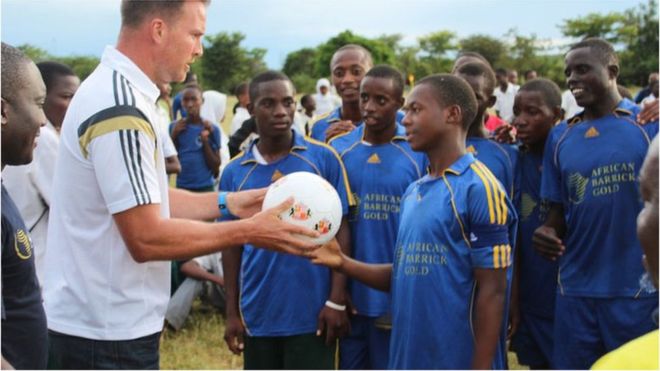
During the 1960s and 1970s, several African federations lacked formal coaching academies. European coaches were often brought in to:
- Establish technical departments
- Organize youth structures
- Create training programs
- Standardize tactical identities
Countries like Egypt, Ethiopia, Morocco, and Nigeria relied heavily on foreign managers to build professional frameworks that local coaches would later inherit.
Success Stories That Cemented the Trend
By the 1980s and 1990s, many European coaches had achieved landmark results:
- Claude Le Roy guiding Cameroon
- Bruno Metsu leading Senegal to the 2002 World Cup quarter-finals
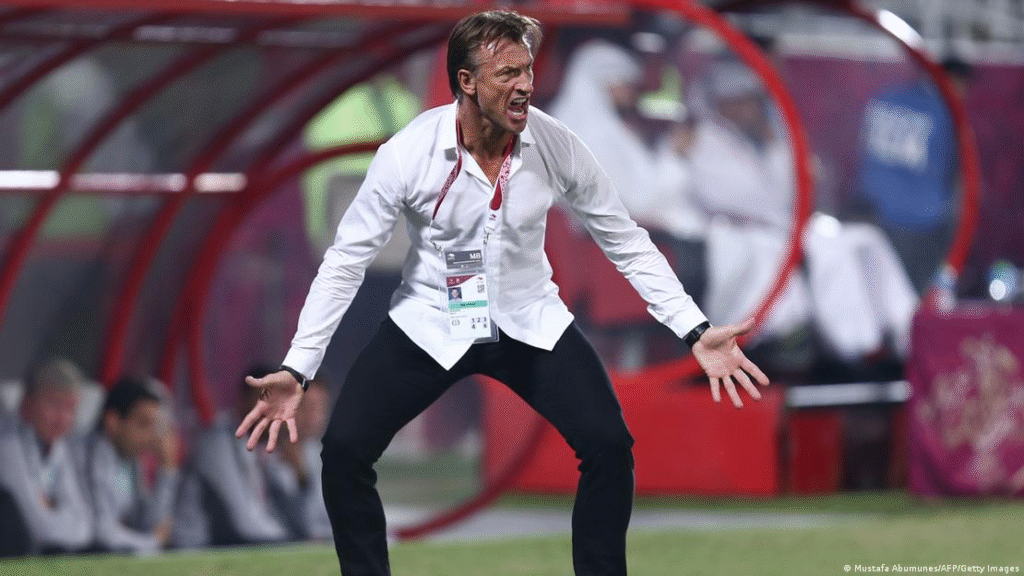
- Hervé Renard winning AFCON titles with Zambia and Ivory Coast
- Otto Pfister, Rudi Gutendorf, and others impacting multiple national teams
These successes encouraged more African federations to hire European managers, believing they brought tactical discipline and experience lacking locally.
Why African Federations Continue Hiring European Coaches
Tactical Structure and Discipline
One of the most commonly cited advantages of European coaches is their ability to instill tactical organization.
Many national teams, especially those with highly talented but tactically inconsistent squads, seek European coaches to bring:
- Defensive structure
- Organized pressing
- Transition control
- Game management principles
This shift has been crucial for nations like Morocco, Algeria, Egypt, and Tunisia, whose teams rely heavily on positional discipline.
Experience in High-Pressure Competitions
European managers often arrive with experience in international tournaments or high-level club football. This background helps African teams better prepare for:
- World Cup qualifiers
- Africa Cup of Nations
- International friendlies
- Youth development tournaments
Coaches who understand the psychological and tactical demands of elite competition are highly valued.
Access to European-Based Players
Many African stars play in Europe. European coaches often have deeper tactical familiarity with:
- European leagues
- Player profiles
- Training methods
- Fitness standards
This makes it easier for them to integrate overseas-based players into national-team systems.
The Strategic Impact on African Football Philosophy
Tactical Modernisation
European coaches have contributed to a tactical evolution across the continent. Africa has moved from relying on raw athleticism to embracing complex systems such as:
- 4-3-3 positional play
- Compact 4-4-2 mid-blocks
- Structured 3-5-2 transitions
- Inverted full-back systems
- High pressing and counter-pressing
These systems reflect modern European football principles that have reshaped African national-team identities.
Data and Analytics Adoption
The increasing use of data analytics in Africa mirrors European influence. Tools such as:
- GPS tracking
- Match analysis software
- Video breakdowns
- Injury profiling data
have become more common under European technical staff. This professionalization has improved preparation and performance.
Youth Development and Talent Pathways
European managers have helped develop youth programs in countries like:
- Ghana
- Morocco
- South Africa
- Senegal
- Nigeria
They have advocated for:
- Talent identification networks
- Age-group specialization
- Modern academy structures
- Coaching certification pathways
These reforms continue to benefit national teams long after a coach leaves.
Criticisms and Controversies
Despite the benefits, the hiring of European coaches remains controversial in Africa.
Perceived Undervaluing of Local Coaches
One of the most heated debates is whether African coaches receive fair opportunities. Critics argue that:
- Local coaches are overlooked in favor of foreigners
- Europeans are hired even with weaker CVs
- African coaches are judged more harshly
- Local managers deserve more trust and long-term projects
This imbalance has led to public frustration in many nations.
Cultural and Communication Barriers
Some European coaches struggle to adapt to African environments. Issues often include:
- Language barriers
- Misunderstanding local training habits
- Tension with federations
- Difficulty managing local-based players
- Over-reliance on European-based stars
These factors sometimes create friction within national teams.
Short-Term Projects and High Costs
European coaches often demand:
- Larger salaries
- Better resources
- More staff
- Longer preparation camps
Some federations struggle financially, leading to:
- Contract disputes
- Delayed salaries
- Inconsistent support
Short-term projects also limit systemic development.
African Coaches Rising — A Growing Countermovement
Local Success at Major Tournaments
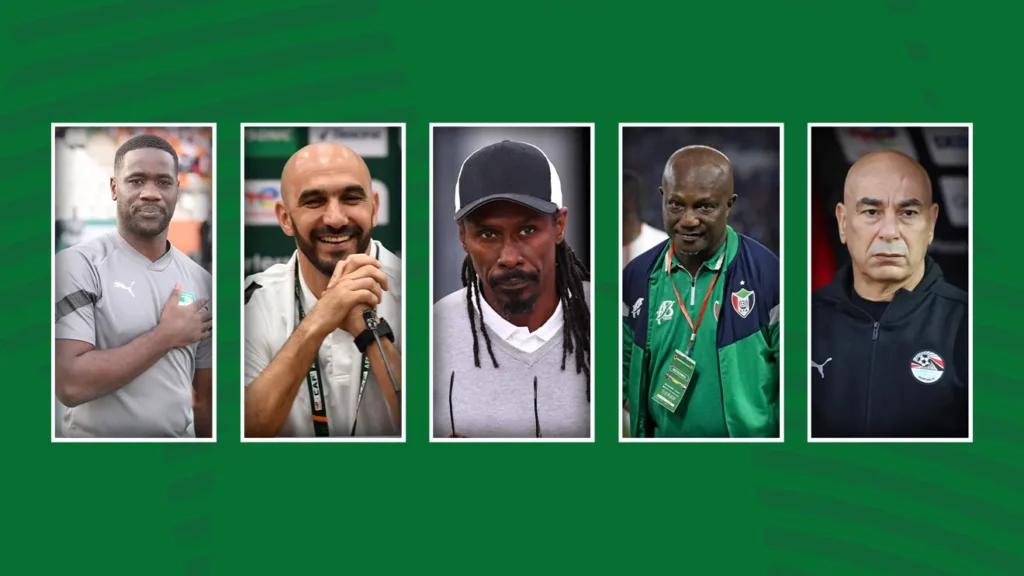
African coaches have become increasingly successful in recent years. Examples include:
- Aliou Cissé winning AFCON with Senegal
- Walid Regragui guiding Morocco to the 2022 World Cup semi-final
- Djamel Belmadi winning AFCON with Algeria
- Florent Ibengé shaping DR Congo
These achievements have empowered a new generation of African coaches.
CAF Coaching License Improvements
CAF has recently improved its coaching education system, allowing more African managers to earn:
- CAF Pro License
- CAF A License
- UEFA-equivalent certifications
This reduces dependence on European expertise.
Public Demand for Local Identity
Many fans now prefer local coaches who:
- Understand the players
- Connect with fans
- Respect cultural football values
- Represent national identity
This shift adds pressure on federations to reconsider their hiring philosophies.
Case Studies — European Coaches Who Transformed African Teams
Hervé Renard — The AFCON Specialist
Renard’s work with Zambia and Ivory Coast made him a continental icon. His strengths include:
- Simple, clear tactical systems
- Player motivation
- Defensive organization
His influence inspired African coaches to study modern European methodology.
Bruno Metsu — The Senegal Miracle of 2002
Metsu’s calm leadership and modern tactical systems turned Senegal into global sensations. His relationships with players set a benchmark for foreign coaches.
Claude Le Roy — “The White Wizard” of African Football
Le Roy coached several African nations and helped develop coaching structures, leaving long-lasting legacies.
The Future of European Coaching in Africa
A More Balanced Partnership
The future likely involves collaboration rather than dominance.
European coaches may continue to play important roles, but African coaches will increasingly hold:
- Top national-team jobs
- Leadership in youth systems
- Positions within CAF coaching departments
Technology and Tactical Globalization
As information sharing increases, coaching knowledge is becoming universal.
African coaches no longer depend on Europe for tactical innovation.
The Rise of Dual-National Coaches
More African former players trained in European academies are becoming coaches.
They embody both worlds and represent the future of African national-team coaching.
Conclusion: A Continuing Evolution
The influence of European coaches in African national teams is a complex, multifaceted phenomenon.
It has delivered tactical advancement, professionalization, and historic success.
At the same time, it has triggered debates about opportunity, identity, and fairness.
As African football grows, the conversation is shifting from “European vs African” to “What works best for each team?” The continent is entering a new era where expertise, collaboration, and long-term planning matter more than nationality.
European coaches will remain part of African football’s story but increasingly as partners rather than leaders.
The future belongs to a balanced coaching ecosystem that blends global best practices with African innovation, identity, and ambition.