
The Africa Cup of Nations stands among the most colourful vibrant and unpredictable international football competitions.
It has produced unforgettable finals dramatic rivalries iconic champions and some of the greatest footballers the sport has seen.
Yet beyond the goals and trophies the AFCON carries a wealth of hidden stories remarkable details and surprising moments that many fans have never encountered.
This evergreen feature expands the ten little known AFCON facts provided above into a deeper compelling narrative that celebrates the tournament’s heritage diversity drama and unmatched energy.
As Africa’s flagship football festival the AFCON remains a treasure chest of extraordinary details.
These stories enrich its legacy far beyond the scorelines and standings.
Ghana Permanently Kept the First AFCON Trophy After 1978

Ghana’s place in AFCON history is profound. In 1978 the Black Stars became the first nation to win the tournament three times which earned them the right to keep the original trophy permanently.
The Confederation of African Football had set this condition to inspire fierce competition and Ghana seized that opportunity through a golden generation featuring some of the finest talents of their era.
Why This Achievement Matters
Ghana’s permanent capture of the trophy helped cement their reputation as one of Africa’s earliest football powerhouses.
Their triumph came during a period when African football was still building global recognition and Ghana’s leadership on the continental stage contributed significantly to the rise of West African football influence.
The fact that the original trophy was retired due to Ghana’s excellence adds a rare layer of mythology to AFCON history.
Modern fans often do not realise that the trophy held by champions today is not the same as the original icon lifted in the early decades of the tournament.
Ghana’s glory in 1978 also became a foundational moment for the national pride that still surrounds the Black Stars.
Although Ghana has not won the tournament frequently in the modern era their early dominance remains one of the continent’s essential heritage chapters.
Shiva N Zigou Remains the Youngest Goalscorer in AFCON History
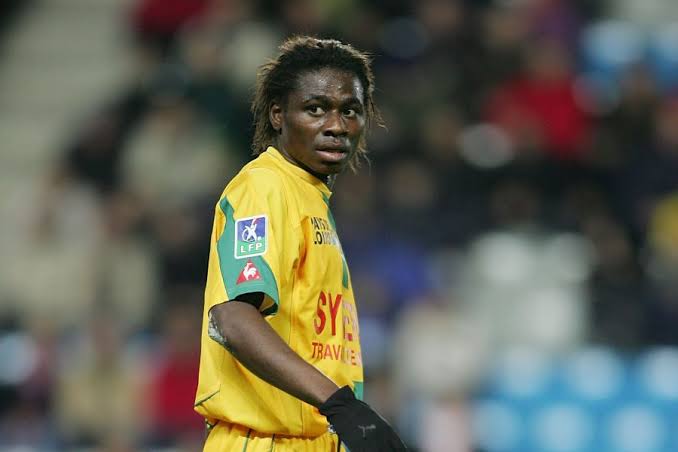
Gabon’s Shiva N Zigou achieved one of the most remarkable milestones when he scored at the AFCON tournament in 2000 at the age of sixteen years and ninety three days.
His record is rarely mentioned despite its significance and even long time fans of African football may be unaware of this achievement.
The Remarkable Story Behind His Record
N Zigou’s moment is not remembered solely for the goal itself but also for what it symbolised. AFCON has long been a stage where young African talents announce themselves to the world.
Many future legends including Samuel Eto o Yaya Toure and Mohamed Salah used the continental stage to reveal their potential.
N Zigou’s achievement is therefore not simply a statistic. It is a reminder that the AFCON is often the birthplace of new African stars.
His goal stands as a timeless symbol of opportunity that the tournament provides.
His record remains unbroken and many modern football fans are surprised when they learn that a teenager from Gabon holds one of the most unique marks in the tournament’s long history.
Hossam Hassan The Oldest Goalscorer at Thirty Nine Years and One Hundred Seventy Four Days

Egyptian legend Hossam Hassan made history in 2006 when he scored at the AFCON at an age when most footballers have retired. His longevity remains a standard for African professionals.
The Legacy of an Enduring Icon
Hassan’s record underscores the long careers enjoyed by many African stars who continue playing at high levels due to discipline technical ability leadership qualities and sheer passion for the game.
His longevity also mirrored Egypt’s own continuing dominance in the competition. Egypt lifted the AFCON trophy in 2006 2008 and 2010.
Hassan’s contribution during the 2006 edition was symbolic of Egypt’s blend of experience and youthful talent.
His record remains untouched and stands as a testament to the remarkable endurance of Africa’s football greats.
Laurent Pokou Scored Five Goals in a Single Match in 1970

Few individual performances in AFCON history match the brilliance of Laurent Pokou’s five goal explosion against Ethiopia during the 1970 tournament. Ivory Coast won that match six to one.
Why Pokou’s Record Still Stands Tall
Scoring five goals in a single international match is a rarity in football history.
Pokou’s performance is one of those moments that transformed him from a talented forward into an AFCON legend.
Pokou finished as the top scorer of the 1970 tournament and his five goal haul remains unmatched in the competition’s entire history.
Modern football rarely produces scorelines that allow such dominance by one player which makes his historic feat even more extraordinary.
Only Three Nations Have Won the AFCON on Their First Appearance
Egypt in 1957 Ghana in 1963 and South Africa in 1996 remain the only nations to win the tournament at their very first AFCON.
A Look at Each Historic First Time Triumph
Egypt 1957
Egypt won the inaugural tournament which consisted of only three teams.
Their early dominance set the stage for decades of success.
Ghana 1963
Ghana’s victory in their debut appeared to be a preview of an incredible football era.
They later won again in 1965 and dominated the early decades.
South Africa 1996
Perhaps the most emotional victory. South Africa hosted the event only four years after the end of apartheid.
Their triumph remains one of the most symbolic in AFCON history.
These wins reflect different eras and different contexts yet all three share the same message.
AFCON often provides dramatic storylines written by nations rising into the spotlight for the first time.
Only Three Teams Participated in the First AFCON
The first Africa Cup of Nations in 1957 featured only Egypt Ethiopia and Sudan.
It was a humble start but one that planted the seed for what would grow into one of the greatest football tournaments in the world.
How the Tournament Grew From These Modest Beginnings
The limited participation was due to political and logistical challenges in a continent still fighting colonial influence.
Yet even with only three teams the first AFCON laid the foundation for an event that would eventually include twenty four nations.
The growth from three teams to twenty four reveals the dramatic development of African football across decades.
This evolution also mirrors the progression of independence movements national pride and continental unity.
The First Opening Match to End Goalless Came in 2013
It is astonishing to many fans that no opening match in AFCON history had ever ended without goals until 2013.
South Africa and Cape Verde delivered the first goalless draw in an opening game.
Why This Long Running Streak Was Surprising
For decades AFCON opening games were known for goals excitement and unpredictability.
Tournament openers often carried the energy of a continent celebrating a major football event.
The 2013 match however marked a shift in tactical approaches.
African teams had begun adopting more structured defensive systems with a growing presence of coaches influenced by European tactical philosophies.
This fact remains a curious historical milestone and highlights the changing dynamics of African football.
Ndaye Mulamba Holds the Single Tournament Scoring Record With Nine Goals

The Democratic Republic of Congo forward Ndaye Mulamba scored nine goals in the 1974 tournament which remains the highest tally for any player in a single AFCON edition.
The Making of a Continental Scoring Legend
Mulamba’s nine goal haul is one of the most remarkable feats in the competition’s entire history.
Even modern legends like Samuel Eto o and Didier Drogba never reached such a tournament total.
His goals powered DR Congo to a famous championship. Mulamba’s influence extended beyond goals.
He embodied the determination resilience and attacking power that African football is known for.
His record remains untouched and continues to stand out in AFCON record books.
Rigobert Song and Ahmed Hassan Played in Eight AFCON Editions Each
Rigobert Song of Cameroon and Ahmed Hassan of Egypt hold one of the most impressive longevity records in global football.
Each played in eight consecutive AFCON tournaments between 1996 and 2010.
The Rare Durability of True African Icons
Their consistency across fourteen years highlights leadership resilience and an unmatched ability to compete at elite level football over long stretches of time.
Song remains a beloved figure for Cameroon not only for his leadership as a defender but also for his influence on younger generations including his relative Alexander Song.
Hassan on the other hand is often regarded as one of the greatest midfielders in African history.
His presence was instrumental in Egypt’s record breaking three consecutive AFCON titles.
Together they shaped an era and their shared record remains one of the most impressive ever achieved.
AFCON Was Almost Delayed in 2023 Due to a Late Broadcast Deal
Few fans know that the 2023 edition nearly suffered a major disruption because CAF finalised the main broadcast contract only three days before the opening game.
Why This Matter Stands Out in AFCON History
Broadcast revenue is essential for modern football tournaments.
The unprecedented delay placed enormous pressure on organisers and broadcasters.
Despite the challenges the tournament began as scheduled which demonstrates the resilience adaptability and urgency with which African football institutions operate.
This incident serves as a reminder that the scale of AFCON is massive and its smooth execution requires complex negotiations behind the scenes.
Why These Little Known Facts Matter
These ten facts reveal that AFCON is more than a tournament. It is a living storybook full of legends underdogs pioneers record breakers and unforgettable events.
From historic firsts to remarkable individual performances each of these stories adds depth to African football culture.
AFCON is not only about trophies. It is about identity pride heritage and the heartbeat of a continent united by football.
These little known facts offer fans a chance to connect with the tournament in new ways reminding them that every edition carries layers of meaning beyond what is seen on the pitch.