Strategy for Addressing Tactical Timeout Challenges to Be Explored
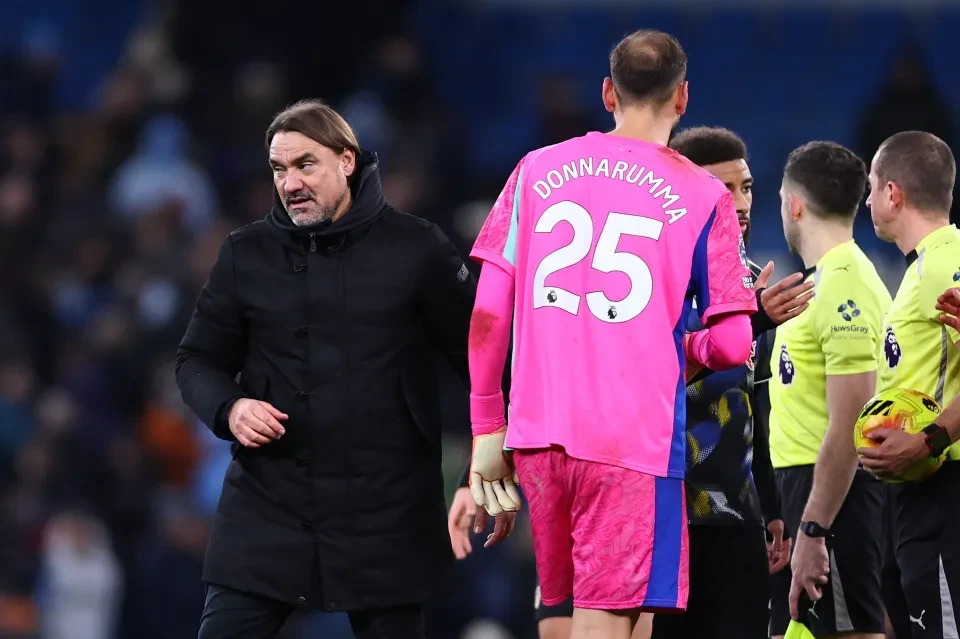
Potential Rule Revision for Goalkeeper Tactical Timeouts
Overview of Proposed Changes
Discussions are underway regarding a regulatory amendment that would compel teams to substitute an outfield player for a temporarily injured goalkeeper. This initiative is aimed at addressing the issue of teams capitalizing on existing loopholes to gain strategic advantages during matches.
Context of the Discussion
Following the recent match where Leeds United’s manager Daniel Farke accused Manchester City’s Gianluigi Donnarumma of feigning an injury to manipulate the rules, the topic has gained traction. In that game, City secured a 3-2 victory but faced significant pressure from Leeds, who believe that such tactics are becoming commonplace among teams seeking to halt momentum.
Previously, outfield players would feign injuries to create strategic breaks in the game. However, a directive introduced at the start of the 2023/24 season mandates that these players remain off the field for 30 seconds after going down. This approach was intended to mitigate such tactics, but the focus has now shifted to goalkeepers who, after receiving treatment, are not required to leave the field.
Recent Discussions
During a meeting held by the International Football Association Board (IFAB) in October, several proposals aimed at enhancing game flow and reducing interruptions were reviewed. One significant point of discussion was the frequent occurrence of goalkeepers appearing injured, which allows coaches to provide tactical instructions to players.
Support was noted for a proposal that would require a team to substitute an outfield player for 30 seconds when a goalkeeper receives treatment, aligning the rules for goalkeepers with those for outfield players. While acknowledging that some goalkeeper injuries are genuine, the need for regulating this tactic to ensure fair play has become apparent.
Another suggested measure is to prohibit players from approaching the touchline during stoppages in play.
Future Considerations
These proposals are scheduled for further evaluation at IFAB’s annual meeting on January 20. The idea of requiring teams to replace an outfield player during a goalkeeper’s treatment is garnering increased approval. Pundit Danny Murphy emphasized the urgency for lawmakers to enact such rules expediently, arguing that it would result in a fairer playing field.
In the pivotal moment of their recent match, Donnarumma’s stoppage for treatment provided Guardiola with an opportunity to relay instructions to his team, reinforcing the perception that such tactics are strategic maneuvers employed for competitive advantage.
Statements from Managers
Farke openly criticized the situation, expressing doubt about the fairness of utilizing such tactics, while recognizing that as long as it remains within the rules, teams will continue to exploit it. He emphasized the need for clearer guidelines from football authorities to address the ethos of fair play.
Moreover, Bolton Wanderers’ manager Steven Schumacher acknowledged the widespread use of such tactics across various levels of football, underscoring the impact on game momentum and the influence on match outcomes.
Current Regulations on Player Treatment
According to IFAB guidelines, a player who undergoes evaluation or treatment while on the pitch must leave the field, with exceptions for:
- Goalkeeper injuries;
- Collisions between a goalkeeper and outfield player requiring assistance;
- Collisions between teammates;
- Injuries from fouls resulting in a yellow or red card;
- Injuries to players taking a penalty.
This ongoing dialogue highlights the need for evolving regulations that reflect the current tactical realities of football while promoting fair play principles.