More Than Just a Game: DR Congos Quest to Break 52
“This is more than just football” – DR Congo’s quest to conclude a 52-year wait for World Cup participation
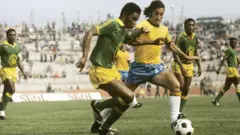
DR Congo’s 1974 World Cup Journey
In 1974, Zaire, now known as the Democratic Republic of Congo (DRC), represented Africa at the World Cup, but faced a challenging campaign, losing all three of their group matches, including a notable defeat against Brazil.
A Long-Awaited Opportunity
Football enthusiasts in the Democratic Republic of Congo are eager to rectify the disappointments of their lone World Cup appearance back in 1974. That year was notable not only for the political landscape in the United States but also for the invention of the Rubik’s Cube, alongside Muhammad Ali’s legendary fight against George Foreman, hosted in Kinshasa.
A win for the DRC Leopards in the upcoming intercontinental playoff against Jamaica would mark the conclusion of a 52-year wait, allowing Africa to send ten representatives to the upcoming tournament in North America.
- Key Highlights from the Players:
- Axel Tuanzebe, defender for Burnley, labeled the match as “the biggest of my career.”
- Former captain Gabriel Zakuani described it as “the most significant game in our history.”
With a potential victory, more than 110 million people within the DRC, along with its global diaspora, will hope for a better outcome than what transpired in 1974.
The Infamous 1974 Campaign
The DRC’s first run in the World Cup began poorly, with a 2-0 loss to Scotland, followed by a harsh 9-0 defeat by Yugoslavia. This culminated in a 3-0 loss to Brazil, which turned into one of the tournament’s most discussed incidents. Right-back Mwepu Ilunga’s decision to charge out of the wall during Brazil’s free-kick raised eyebrows among commentators and became a symbol of the perceived instability within African football at that time.
Former goalkeeper Mohamed Kalambay defended the team, asserting their competence: “We were a good team. We deserved to qualify.”
Incidences of poor performance have been attributed to several underlying factors, including unpaid bonuses and threats faced by players.
Now, a new generation hopes to craft their own memorable moments and erase the shadow of past disappointments. A successful match against Jamaica would place DR Congo in a group with Portugal, Uzbekistan, and Colombia.
Zakuani, a current coach for the Under-20 team, stated that the mission extends beyond mere participation: “The goal is to compete effectively and to be a part of history.”
Football’s Power to Unite Amidst Challenges
When Zaire qualified in 1974, they became just the third African nation to reach the World Cup, following Egypt (1934) and Morocco (1970). Over the past decades, however, the DRC has witnessed a decline while other smaller nations like Ghana, Senegal, and Tunisia have enjoyed multiple World Cup trips.
The country’s challenges stem largely from endemic corruption, political turmoil, and ongoing conflict since the end of Belgian colonialism.
The 1974 squad also benefited from the support of President Mobutu Sese Seko, who was notorious for his authoritarian rule yet contributed to the team’s resources and morale.
Today, sports journalist Jean-Jacques Akengelaka notes the stark differences in facilities and resources for training and development for football in the DRC compared to other nations.
Conflict in the country continues, especially in the eastern regions where rebel groups control significant territories. Recently, DR Congo’s team used a platform during their 2023 Africa Cup of Nations (Afcon) campaign to advocate for peace.
A Call for Unity
In a recent show of solidarity, players utilized their national anthem performance to protest against violence, symbolizing the urgent need for peace. Their efforts, particularly during matches in high-pressure situations, aim to lift spirits and provide hope for affected communities.
Yet, the challenges for fans remain significant. Matches, including the upcoming encounter against Jamaica, will be broadcast late into the Congolese night, forcing many to stay home due to safety concerns related to nighttime movement in areas like Bukavu.
Evolution of the DR Congo National Team
The current squad of the Leopards qualified for the intercontinental playoffs by securing the second position in their group behind Senegal. They further progressed through a tough playoff round in Africa, defeating both Cameroon and Nigeria.
The incorporation of players from the diaspora has been crucial to their success. For instance, both Tuanzebe and Aaron Wan-Bissaka have backgrounds in English youth football. Wan-Bissaka shared that he felt immediately embraced by the team and was proud to represent his heritage.
Of the 26 players on the current roster, a substantial number were born abroad, reflecting the duality of the challenges faced within the DRC’s football structure and the global nature of the sport.
Issues Within Domestic Football
Despite the national team’s strides, the local leagues are fraught with issues, as evidenced by the unfinished Linafoot season due to financial struggles exacerbated by government policy. The national football federation, Fecofa, is under the supervision of a Fifa-appointed committee due to prolonged leadership issues.
While significant funding has been funneled into international sponsorships, many criticize the lack of investment in local football infrastructure.
Tuanzebe emphasized the magnitude of their mission, noting the opportunity to create a memorable legacy, stating, “This is one of those moments where this is more than football; this is about leaving a legacy we will cherish.”
Related Topics
- African Sports
- Football
- FIFA World Cup
- Nigeria alleges “fraud” as they challenge DR Congo’s World Cup ambitions.
- Fifa issues sanctions to Nigeria and DR Congo regarding recent playoff controversies.