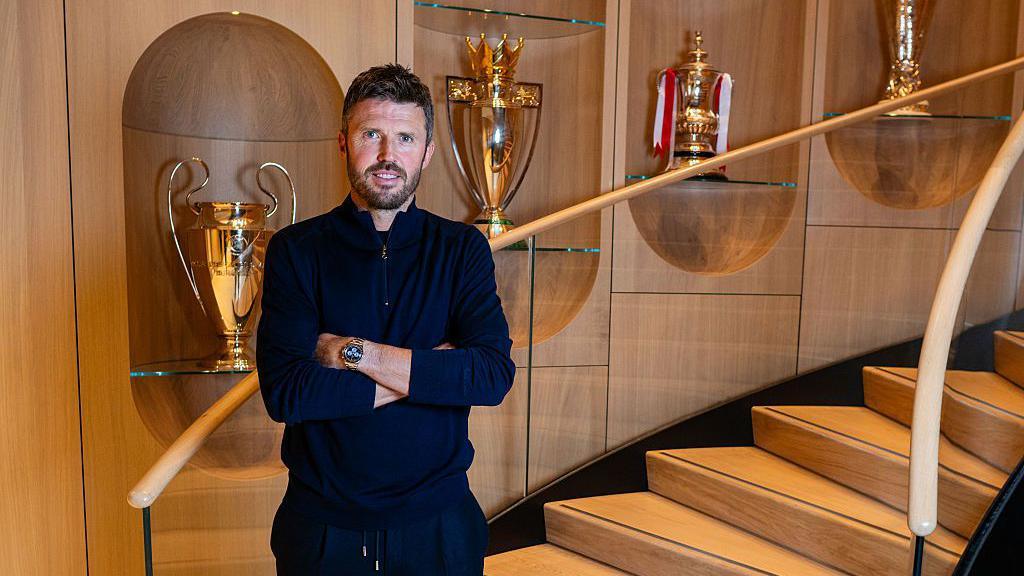
Carrick’s Tactical Vision for Manchester United
Overview of Carrick’s Coaching Roles
There are two distinct personas of Michael Carrick in the world of coaching: the temporary manager who oversaw Manchester United for a trio of matches, and the manager who helmed Middlesbrough for three years. The contexts of these spells couldn’t be more contrasting, with one being a brief stint and the other a longer-term responsibility. Now, as Carrick embarks on a five-month term as interim head coach until the season concludes, what strategies might he adopt for United? Our analysis delves into Carrick’s tactical philosophies and player utilization based on his previous experience at Middlesbrough as well as his interim role at United.
Carrick’s Adaptability as a Key Factor in the Initial Month
Carrick’s opening fixtures as United’s head coach pose a formidable challenge, with matches against the league’s top contenders, Manchester City and Arsenal. While at Middlesbrough, Carrick often maintained a consistent system, focusing on dominating ball possession.
In his previous role at United, he faced high-profile managers like Thomas Tuchel and Unai Emery, securing two victories and a draw through tactical modifications for each match. A notable alteration saw his United team adopt a 4-3-1-2 formation to effectively congest the midfield against Chelsea, thereby disrupting their attacking flow. His approach involved narrowing the front three to limit supply lines to Chelsea’s key midfielders, while instructing McTominay and Fred to track and press the opposition’s wing-backs.
With only a couple of games in the immediate future, Carrick could modify his tactics compared to his more routine Middlesbrough strategy to counter Arsenal and Manchester City’s strengths effectively.
Tactical Adjustments Against Arsenal and Manchester City
Rayan Cherki’s impact in recent games has been substantial, which may prompt Carrick’s side to focus on limiting his space and influence on the pitch. Additionally, new signings like Antoine Semenyo and the return of Jeremy Doku from injury mean that City can pose threats from the flanks, so adopting a strategy to double-team the wide players could be essential.
A potential formation of 4-5-1 might serve as an effective framework, prioritizing defensive solidity before launching swift counter-attacks against a potentially vulnerable defense. When facing Arsenal, Liverpool’s recent match offers a valuable, albeit precarious, blueprint. Liverpool’s approach involved deploying Florian Wirtz as a false nine to create midfield overloads, while their wingers excelled at marking Arsenal’s adventurous full-backs and stifling their influence.
If Carrick decides to innovate early, such tactics could be critical.
The Profile of Carrick’s Manchester United
Carrick’s tactical decisions will be pivotal in bridging the quality gaps his team faces in the league. While United boasts a robust roster, the ability of Carrick to implement his vision effectively over time will shape the playing style.
During his tenure at Middlesbrough, Carrick typically embraced a 4-2-3-1 formation, which evolved dynamically during matches according to ball possession phases. “The specific structure is often less significant than how we execute our game plan,” Carrick stated regarding his approach in 2024. He emphasized a short passing style from goal-kicks, utilizing deep positioning from defenders and midfielders. However, adaptation may be needed for goalkeeper Senne Lammens, who could find it challenging in a high-press, short pass strategy.
Carrick’s Middlesbrough approach optimized possession, yet their directness was occasionally limited, leading to criticism of being slower in attack. Aiming to avoid such pitfalls, United’s superior talent can help marry Carrick’s system with more incisive offensive play.
Building on Carrick’s Base Tactics at United
Ultimately, Carrick will strive for a high-possession style while maintaining a compact defensive shape, akin to frameworks utilized by many contemporary coaches. If he can instill these tactical principles within his squad over the coming months, it will establish a solid foundation that future coaches might easily build upon.
Steve Holland, the new assistant manager, noted the various routes to achieve the 3-2-5 attacking setup that Carrick likely favors. Players like Luke Shaw may provide defensive cover while maintaining their attacking duties, enhancing flexibility within the formation.
Carrick’s strategies are clear, yet his ability to adapt to the unique challenges of the Premier League will be crucial to his success.