Liverpool’s Continued Struggles Against Defensive Units: Solutions Needed
Overview of the Situation
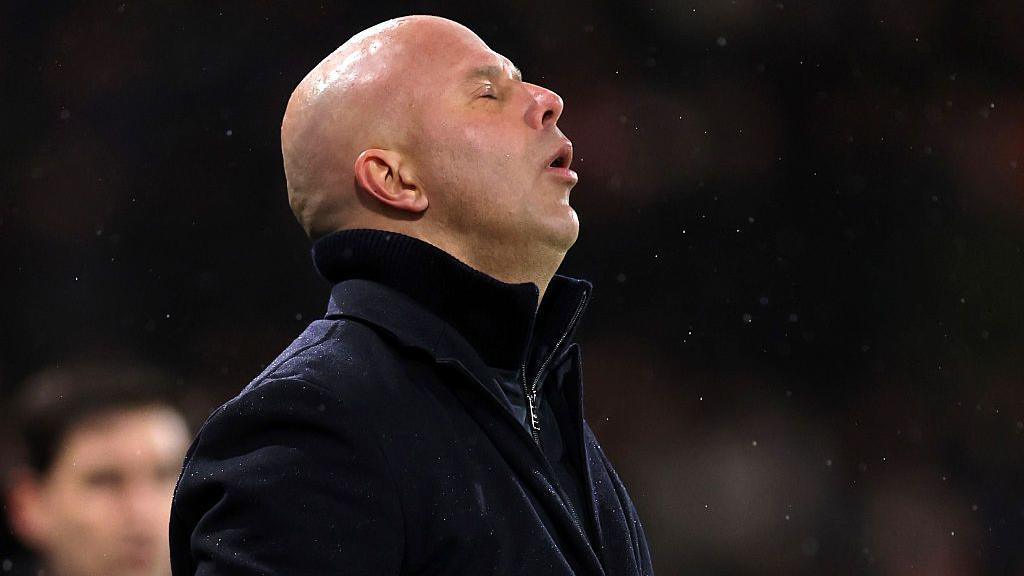
If you have tuned into any of Arne Slot’s press interactions this season, the phrase “low blocks” has become increasingly prominent. This term defines a football team’s defensive posture—particularly, the tendency to shield their goal area by effectively blocking space. This season, Slot’s squad has shown difficulties in execution and fluidity, primarily struggling against opposition that adopts a deep defensive strategy. The discontent among fans has escalated, stemming from repeated mentions of these low blocks.
Historical Context
Liverpool’s former star, Steven Gerrard, voiced a critical perspective: “He needs to refrain from referencing low blocks. Teams have used them against Liverpool since my playing days. It’s simply how the game is conducted.” Nonetheless, Slot’s assertion holds weight, as his team faces the most frequent low block challenges in the league, accounting for 26% of opponent strategies. In contrast, Liverpool’s attacking fluidity seems to only emerge during their Champions League matches, where they have impressed with a scoring record of nine goals without conceding in their last two fixtures.
Strategies to Overcome Low Blocks
Addressing Set-Piece Challenges
On January 1st, Slot elaborated on various strategies to dismantle low blocks, explicitly noting the importance of set-pieces. Utilization of these strategic opportunities has been favored by many top clubs. This season, 32.2% of opening goals in the Premier League arise from non-penalty set-pieces, a record high since 2011.
The attacking side retains a distinct advantage in set-pieces, as teams meticulously craft these plays during training. However, Liverpool has struggled in this regard, recently losing set-piece coach Aaron Briggs amid ineffective execution.
Statistics reveal that Liverpool generates the second-lowest expected goals (xG) from set-pieces, with only Nottingham Forest trailing. The absence of reliable corner-takers like Trent Alexander-Arnold and Andy Robertson has hindered their effectiveness, with Dominik Szoboszlai generally taking the reins for corners. His deliveries, primarily from the right, have predominantly been out-swingers, a stark contrast to the league trend favoring in-swingers into congested areas.
Importance of Individual Brilliance
Another way to dismantle these low defensive setups is through individual excellence, reminiscent of Jeremie Frimpong’s impressive play against Wolves. Creating overloads—situations where one side has more attacking players than the other—can critically open up scoring opportunities. Frimpong’s speed enabled Liverpool to overrun defenses, though his recent injury in a Champions League match raises concerns over how to replicate that dynamic.
In contrast, the current wingers, primarily Salah and Gakpo, face challenges when attempting to breach low blocks. Their preferred style, involving cutting inside rather than probing the byline, has often led to taking low-probability shots from outside the area.
The Long-Range Shot Dilemma
While Slot did not specifically address long-range shots in his analysis, they can be an effective option. The ability to shoot from distance can force defenders to engage, potentially creating space closer to the goal. Notably, Szoboszlai’s powerful strike in an FA Cup match exemplified this approach, although in a league encounter against Burnley, Liverpool’s efforts were stymied by numerous blocks.
To maximize this tactic, Liverpool must find ways to create space and time for shooters, particularly by initiating runs that draw defenders. The recent loss of key dribbler Luis Diaz complicates this strategy. To navigate these challenges, Slot must utilize creative options like Ekitike or Ngumoha to maintain attacking threats.
Alternative Approaches
Slot mentioned alternatives like executing counter-attacks and reclaiming possession higher up the pitch. Analyzing Liverpool’s goal-scoring pattern reveals instances where they exploited opposition mistakes to penetrate through the center. However, Premier League teams typically counter this by prioritizing long passes, minimizing Liverpool’s chances to apply pressure.
Looking Ahead: The Path Forward
At the season’s beginning, Liverpool frequently overcommitted players forward but struggled defensively against counter-attacks. Adjustments made by Slot have since focused on enhancing defensive solidity, yet the side has sacrificed offensive fluidity. Recent performances have demonstrated marked defensive improvements, but a lack of potency in attack raises concerns.
Incorporating players like Florian Wirtz, who shows promise in creating space with clever plays, may aid in countering this low-block issue. The chemistry developing between Wirtz and Ekitike can be a beacon of hope, as evidenced by their recent assists to one another.
In conclusion, overcoming low block defenses will require a blend of tactical acumen, personal flair, and a cohesive unit willing to adapt and innovate. The road ahead is complex, but Liverpool possesses the talent and depth necessary to amend their offensive shortcomings as they navigate through the remainder of the season.