How Football Emerged in Africa: Key Clubs, Infrastructure Development, Famous Matches, and Championships
Football in Africa is more than a sport. It is a cultural identity, a social glue, and one of the continent’s most powerful unifying forces.
Its rise from colonial-era introduction to a globally relevant football powerhouse is a story of passion, community, resilience, and extraordinary talent.
Today, African nations, players, and clubs influence world football, yet the journey began with humble street games, coastal interactions, and the determination of enthusiasts who built the game from the ground up.
This comprehensive article explores how football emerged on the continent, the clubs that defined its growth, the structures that shaped its development, the matches that forged footballing memory, and the cultural significance that continues to strengthen African football’s legacy.
Introduction: The Birth of Football in Africa
Football arrived in Africa in the late 19th century, introduced primarily by European merchants, colonial administrators, soldiers, and Christian missionaries.
The game rapidly gained traction in coastal towns ports like Accra, Lagos, Dakar, Alexandria, and Cape Town soon witnessed informal kick-abouts between locals, sailors, and colonial officials.
By 1957, Africa staged the first Africa Cup of Nations (AFCON), featuring only three competing nations: Egypt, Sudan, and Ethiopia.
While South Africa was disqualified due to apartheid (Britannica, “Africa Cup of Nations”, britannica.com).
The maiden tournament, though small, demonstrated how deeply football had already taken root across the continent, transforming from a colonial novelty into a beloved pastime embraced by millions.
Football’s early establishment in Africa reflected several factors:
• Low entry barriers: A ball, sometimes improvised was enough.
• Community atmosphere: Football required space and people, both abundantly available.
• Inclusivity: At a time of political and social restrictions, football fields became places of freedom and expression.
• Early club formation: Teams emerged quickly around schools, mission stations, and town centers.
From these beginnings, football would evolve into Africa’s dominant sport—one with global impact.
Origins of the Game on the Continent
Football Arrives Through Commerce, Military, and Missionaries
As European influence expanded across Africa during the late 1800s, so did the sports they brought with them. Football, unlike more equipment-heavy sports, spread rapidly because:
• Soldiers used it for physical training.
• Missionaries employed it in youth programs.
• Merchants played it at ports and trading stations.
• Schools and colleges adopted it in physical education.
The sport’s simplicity allowed young Africans to adapt the rules quickly and form local variations. By the early 20th century, football was played informally across towns and villages.
The Gold Coast Example: Hearts of Oak and Asante Kotoko
The Gold Coast (now Ghana) provides one of the clearest examples of early football expansion. Merchants and colonial workers played matches that captivated local youth, leading to:
• Accra Hearts of Oak, founded in 1911
• Asante Kotoko, founded in 1935
These clubs became the foundations of organised football in the region, producing rivalries, developing local talent, and shaping national football identity (Ghana FA History, (ghanafa.org).
The pattern was similar across Africa: early clubs sprouted around major cities, ports, and colonial administrative centers.
Colonial Influence and Early Leagues
Under British, French, and Portuguese rule, football was used as a tool of:
• Social organisation
• Military recreation
• Mission education
• Urban entertainment
Early structured competitions began to form:
• Portuguese colonies (Angola, Mozambique) created state-supported clubs.
• French colonies (Senegal, Ivory Coast, Algeria, Tunisia) developed multi-tier league systems.
• British colonies (Nigeria, Ghana, South Africa, Kenya) organised regional cups and town leagues.
Although colonial agendas shaped some aspects of the sport, African players and communities quickly took ownership of football, turning it into an expression of identity and aspiration.
Early Development of African Football
From Street Games to Organised Football
As football spread throughout the continent, informal games gradually matured into:
• Community teams
• Schoolboy competitions
• Mission league tournaments
• Workplace teams (railways, mines, factories)
These grassroots levels created fertile ground for the formation of national associations and formal structures.
Formation of National Associations
By the mid-20th century, African territories began building official football bodies.
In the Gold Coast, for example:
• 1952: The Gold Coast Amateur Football Association was formed.
• Post-independence, it evolved into the Ghana Football Association (GFA).
Similar developments occurred in Nigeria, Egypt, Morocco, Tunisia, Sudan, Ethiopia, and South Africa, each establishing governing bodies to organise competitions and represent their nations internationally.
The Birth of CAF
The Confederation of African Football (CAF) was founded on 8 February 1957 in Khartoum, Sudan. The founding members were:
• Egypt
• Sudan
• Ethiopia
• South Africa (later removed due to apartheid)
CAF immediately organised the first AFCON, just days after its formation, marking the beginning of Africa’s continental football journey (CAF Official History, cafonline.com).
The First Africa Cup of Nations (1957)
The inaugural AFCON was modest:
• Only three teams competed.
• Egypt defeated Ethiopia 4–0 in the final.
• It marked Africa’s first international football competition.
Though small, the tournament set a precedent for continental unity through sport and laid the groundwork for modern African championships.
Key Clubs that Shaped African Football
African football’s rise cannot be explained without examining the powerful clubs that shaped domestic and continental competition. These clubs produced legends, built fan cultures, and set technical standards that influenced entire regions.
North African Giants
Al Ahly SC (Egypt)
Founded in 1907, Al Ahly is widely regarded as:
• Africa’s most successful club
• A serial CAF Champions League winner
• A pillar of Egyptian national team success
Al Ahly’s structure, fan base, and cultural symbolism make it one of the world’s most iconic clubs, not just an African powerhouse.
Zamalek SC (Egypt)
Al Ahly’s eternal rival, Zamalek, produced some of Africa’s greatest squads and fostered:
• Tactical innovation
• Elite training programs
• Historic continental triumphs
The Cairo Derby between Al Ahly and Zamalek is one of the fiercest in world football.
Espérance de Tunis (Tunisia)
Espérance shaped North African club football with:
• An advanced academy system
• Strong domestic dominance
• Successful continental campaigns
The club’s influence extends into youth development and modern tactical systems used across Tunisia.
West African Powerhouses
Accra Hearts of Oak (Ghana)
Established in 1911, Hearts of Oak became a flagship club known for:
• The “Phobia” spirit
• Beautiful passing football
• A massive fan base
Their successes in domestic and continental competitions helped Ghanaian football gain recognition.
Asante Kotoko (Ghana)
Founded in 1935, Kotoko is one of Africa’s legendary clubs, known for:
• Strength, resilience, and disciplined play
• Deep community ties with the Ashanti Kingdom
• Strong continental displays
Their rivalry with Hearts of Oak is central to Ghanaian football culture.
Enyimba FC (Nigeria)
Often called “People’s Elephant,” Enyimba rose to prominence in the 2000s:
• Back-to-back CAF Champions League titles
• Modern management structures
• A strong pipeline of Nigerian talent
Enyimba’s success represented a shift in African club football dominance.
Southern and Central Africa’s Key Clubs
• TP Mazembe (DR Congo): Famous for CAF Champions League triumphs and Club World Cup appearances.
• Orlando Pirates & Kaizer Chiefs (South Africa): Cultural institutions with massive fan bases and deep histories.
• APR FC (Rwanda) and ZESCO United (Zambia): Emerging forces with strong investment in infrastructure.
These clubs developed youth systems, fan cultures, and professional organisation that raised competitive standards continent-wide.
Building the Game: Infrastructure and Organisation
Stadium Construction and Urban Football Culture
As football’s popularity grew, governments and local authorities began constructing:
• Stadiums
• Training fields
• Community sports centers
• National technical development hubs
Major tournaments such as AFCON catalysed infrastructure growth. From Cairo International Stadium to Soccer City in Johannesburg, Africa’s major arenas became symbols of national pride.
National Leagues and Continental Competitions
By the 1960s and 70s, most African countries had:
• Fully organised leagues
• Promotion and relegation systems
• National FA cup competitions
• Youth and junior tournaments
CAF expanded competitions to include:
• African Cup of Nations
• CAF Champions League
• CAF Confederation Cup
• CAF Super Cup
• CAF Women’s Champions League (launched 2021)
• African Schools Football Championship
These competitions elevated professionalism and created lucrative pathways for players CAF Official History, cafonline.com).
Football Academies and Player Development
Modern African football relies heavily on youth development. Academies such as:
• Right to Dream (Ghana)
• Diambars (Senegal)
• Wydad and Raja Academies (Morocco)
• Mamelodi Sundowns Academy (South Africa)
• Generation Foot (Senegal)
produce elite players who join top European clubs. This academy model has become crucial for developing Africa’s next generation of international stars.
Rise of Women’s Football
Women’s football in Africa has grown from a marginalised activity to one of the continent’s most dynamic and fast-rising sports.
Over the past three decades, investment, visibility, and participation have increased dramatically driven by national teams, CAF initiatives, global exposure, and local pioneers.
Early Beginnings: Breaking Barriers (1980s–1990s)
• In most African countries, organised women’s football was almost non-existent until the late 1980s.
• Nigeria, Ghana, South Africa, and Senegal were among the earliest to form women’s teams.
• Social stigma and limited funding meant many players trained without proper facilities or support.
Key Milestone
• 1991: Nigeria’s Super Falcons represented Africa at the first ever FIFA Women’s World Cup, marking Africa’s entry onto the global stage.
The Emergence of a Continental Structure (2000s)
African women’s football began gaining legitimacy with CAF establishing structured competitions.
Major Milestones
• CAF Women’s Africa Cup of Nations (WAFCON) became the flagship competition.
• Nigeria dominated early years, winning a record number of titles.
• South Africa and Ghana emerged as competitive forces.
• Domestic leagues began forming, even if underfunded.
Growth, Professionalisation & Global Exposure (2010s)
The 2010s marked a turning point, driven by media coverage, social change, and increasing global demand for African talent.
Youth Football Expansion
• More U17 and U20 teams from Africa qualified for FIFA tournaments.
• Morocco, South Africa, Zambia, and Ghana invested in youth academies.
A New Era: Investment & Professional Leagues (2020s–Present)
The past five years have brought historic growth:
Major Breakthroughs
• Morocco’s massive investment: state-of-the-art women’s football academy, fully professional league, and WAFCON 2022 hosted with record attendance.
• South Africa’s Hollywoodbets Super League became a stable semi-professional league.
• Nigeria, Zambia, and Ghana expanded their domestic leagues and youth pathways.
• Zambia’s women’s team made their Olympic debut and became competitive globally.
WAFCON 2022 → A Tipping Point
• Record crowds (45,000+)
• Morocco’s Atlas Lionesses reached the final
• Continental TV coverage increased dramatically.
Social Impact & Changing Attitudes
Women’s football is now influencing broader social change:
• Increased acceptance of girls in sports.
• Grassroot programs by CAF, FIFA, NGOs and national associations.
• Growth in sponsorship from telecom, banking, and energy companies.
• Role models like Oshoala, Kgatlana, Chawinga, and Refiloe Jane inspiring new generations.
Challenges Still Facing the Game
Despite progress, women’s football in Africa still faces:
• Unequal funding and match bonuses
• Limited stadium access and media coverage
• Poor league structure in several countries
• Cultural and gender barriers in some regions
• Lack of corporate sponsorship in smaller football nations
The Future: A Continental Rise
Africa is now poised to become one of the world’s fastest growing markets for women’s football. With rising investment, improving leagues, and global visibility, experts predict:
• More African teams regularly reaching World Cup knockout stages
• More professional leagues across the continent
• Greater commercial interest and TV broadcasting
• Africa becoming a major exporter of women football talent CAF Official History, cafonline.com).
Famous Matches and Iconic Championships
The 1957 AFCON Final
The 4–0 victory of Egypt over Ethiopia in the inaugural AFCON final established:
• Egypt as a dominant force
• AFCON as Africa’s premier competition
• The beginning of regional rivalries
This tournament became the template for African continental football.
Classic AFCON Clashes
Over decades, AFCON produced legendary matches:
Nigeria vs Cameroon finals (1984, 1988, 2000)
These battles created one of African football’s fiercest continental rivalries.
Egypt’s AFCON Triple (2006, 2008, 2010)
Egypt’s three consecutive AFCON titles remain one of football’s greatest achievements.
Algeria vs Senegal Final (2019)
A tactical masterclass that marked Algeria’s return to glory.
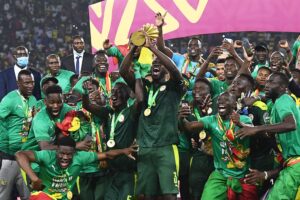
Zambia’s Miracle of 2012
Against all odds, Zambia won the tournament in Libreville, near where their 1993 national team tragically perished.
Club-Level Classics
TP Mazembe’s 1967–1970 dominance
Their back-to-back CAF Champions League titles helped Central African football gain visibility.
Al Ahly’s supremacy in the 2000s and 2010s
Repeated victories made the Cairo club a global name.
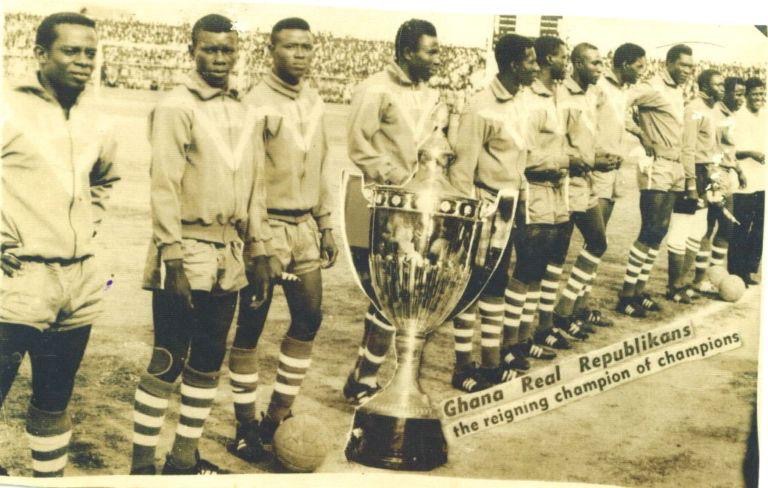
Hearts of Oak’s 2000 treble
Winning the Ghana Premier League, FA Cup, and CAF Champions League in one year put West African club football in the spotlight.
Enyimba’s continental rise
Their tactical discipline and strong management model set new standards.
Africa on the Global Stage
African football reached global consciousness with moments like:
• Cameroon at the 1990 World Cup
• Nigeria’s 1994 and 1996 golden generation
• Senegal’s 2002 World Cup run
• Ghana’s near-semifinal performance in 2010
• Morocco reaching the 2022 World Cup semifinal
These achievements shifted perceptions of African football potential.
Football as a Cultural and Social Force
Football in Africa extends far beyond the pitch.
A Unifying Symbol
Across ethnic, religious, and class lines, football serves as:
• A national symbol
• A cultural mirror
• A unifying force during national events
When national teams play, streets fill with flags, chants, and shared emotion.
Influence on Music, Fashion, and Identity
Football intersects with:
• Music (Afrobeats, Amapiano, Highlife, North African percussion)
• Street fashion (club jerseys, color symbolism, supporter regalia)
• Slang and youth culture
• Art and film
Supporting a local club is a badge of identity, pride, and belonging.
Football and Social Mobility
For many African youth, football offers:
• Career opportunities
• Scholarships
• Community leadership roles
• Social status
Academies and leagues have become pathways to economic empowerment.
Political and Economic Influence
Governments frequently use football for:
• Diplomacy
• Nation branding
• Social cohesion
Major tournaments bring tourism, infrastructure investment, and global media attention (Britannica, britannica.com).
AFCON has long been a tool of soft power. Nations use it to strengthen alliances, attract investors, and display influence far beyond the pitch.
Morocco’s 2025 edition is the clearest proof yet.
The official bid book, handed to CAF on 20 September 2023, devotes an entire chapter to “Maghreb-Sahel Football Bridge” and promises 12 joint training camps with Mali, Niger and Mauritania before kick-off (Bid Book, p. 47).
On 14 February 2022, the exact day Morocco beat Egypt in the semi-final, King Mohammed VI opened the “Africa Investment Forum – Marrakech 2022” with presidents of Senegal, Côte d’Ivoire and Guinea-Bissau on the guest list (Royal Palace press release).
Since winning the bid, Rabat has signed three bilateral accords that cite AFCON 2025 as the launch platform:
1. Morocco–Senegal “Sports & Youth Diplomacy” (Dakar, 12 Dec 2024)
2. Morocco–Mali “Stadium Twinning” (Bamako, 20 Mar 2025)
3. Morocco–Mauritania “Fan Visa Waiver” for tournament dates (Nouakchott, 8 Jul 2025)
(All three published on maroc.ma/diplomatie)
For many nations, the Africa Cup of Nations isn’t just about goals, it’s a platform for political messaging.
The Role Of Governments, CAF, And FIFA In Shaping African Football
African football’s rise on the global stage is the product of many forces working together.
Behind every celebrated tournament, every iconic stadium, and every young star emerging from the continent lies a complex ecosystem.
At the heart of this system sit three crucial pillars: national governments, CAF, and FIFA.
Their decisions, investments, policies, and collaborations have shaped the game’s evolution for more than half a century.
This comprehensive evergreen article examines how each institution contributes sometimes cooperatively, sometimes in tension to the progress of African football.
From infrastructure and youth development to governance and global influence, their roles have defined the present and continue to shape the future.
Government Influence: The Foundation of National Football Growth
While football associations officially manage the sport, it is governments that create the enabling environment through policy, funding, and infrastructure.
National Sports Policies That Shape Football Futures
Government sports policies determine how football is organised from grassroots to elite level.
These policies influence:
- Youth football accessibility
- Talent identification programmes
- Funding structures for national teams
- National football leagues’ operational environment
- Labour and taxation laws impacting clubs
Some countries maintain centralised approaches, while others allow football associations more autonomy.
The balance between state involvement and federation independence has a profound effect on stability and performance.
Infrastructure: Stadiums, Training Centres, and Legacy Projects
Across Africa, governments provide the bulk of physical infrastructure. This includes:
- National stadiums
- Regional football grounds
- Training complexes
- Sports academies
- School football facilities
Many iconic venues that host AFCON tournaments from Cairo International Stadium to FNB Stadium in Johannesburg were built or upgraded through government initiatives.
Without state investment, professional leagues and international tournaments would struggle to exist.
Government Funding for National Teams
National teams rely heavily on government budgets for:
- Travel and accommodation
- Coaching staff salaries
- Bonus structures
- Tournament preparation camps
- Medical and performance support
In some countries, football associations lack the financial capacity to independently sustain national team programs.
Government support becomes the difference between competitive participation and stagnation.
Youth Development Through Education and Community Football
Governments influence youth football through:
- School sports policies
- Community sports centres
- Inter-school competitions
- Scholarships and talent pathways
Countries like Senegal and Ghana have benefited from policies linking education with early football development.
In contrast, nations lacking strong school-based sport programmes often see gaps in grassroots development.
Managing the Continent’s Major Competitions
CAF organises:
- The Africa Cup of Nations (AFCON)
- African Nations Championship (CHAN)
- CAF Champions League
- CAF Confederation Cup
- CAF Women’s Champions League
- Youth and age-group tournaments
These competitions provide exposure, revenue, and pathways for talent.
Club Licensing and Governance Reform
CAF enforces club licensing rules that:
- Professionalise club operations
- Require financial transparency
- Improve stadium and training facilities
- Protect player welfare
- Raise administrative standards
These reforms aim to reduce mismanagement, a chronic issue in African football.
Technical Development and Coaching Education
CAF’s technical programmes support:
- Coaching certification
- Referee development
- Football science and medical education
- Grassroots coaching structures
These initiatives help elevate technical standards across the continent.
Financial Support and Resource Allocation
CAF distributes funds to its 54 member associations. These funds assist with:
- Administrative operations
- Development programmes
- Competition preparation
While financial disparities across nations remain a challenge, CAF’s support is a core component of football development.
Strengthening Women’s Football
In recent years, CAF has accelerated programmes to grow women’s football by:
- Launching the CAF Women’s Champions League
- Expanding the Women’s AFCON
- Supporting federations in women’s grassroots development
Women’s football is now one of the fastest-growing sectors within the CAF ecosystem.
Integrity, Ethics, and Compliance
CAF’s governance reforms aim to improve transparency and accountability. New committees oversee:
- Match integrity
- Anti-corruption measures
- Financial audits
- Disciplinary actions
These efforts, influenced by global governance trends, are essential for long-term credibility.
FIFA’s Global Influence: Funding, Regulation, and Worldwide Integration
FIFA’s presence in Africa extends far beyond the World Cup. Its policies, investments, and regulatory frameworks deeply impact the continent’s football landscape.
FIFA Forward Funding: A Game-Changer
Through the FIFA Forward Programme, African nations receive substantial financial support for:
- Building stadiums
- Constructing technical centres
- Setting up youth academies
- Running national leagues
- Supporting federation administration
Many African national headquarters and technical centres exist because of FIFA funding.
Global Governance and Compliance Rules
FIFA enforces rules to ensure:
- Transparency in national football associations
- Fair elections
- Anti-corruption measures
- Financial accountability
- Safe-guarding policies
These frameworks have pushed African football associations toward better governance.
Youth Tournaments and Global Competitions
FIFA provides Africans with global exposure through:
- U17 World Cup
- U20 World Cup
- Women’s World Cup
- Club World Cup
These tournaments accelerate player development and increase international visibility.
Regulations on Transfers and Player Welfare
FIFA regulates:
- International transfers
- Training compensation
- Player contracts
- Anti-doping programmes
- Medical standards
Given the high migration of African players to Europe and Asia, FIFA’s role in protecting player rights is essential.
Referee and Coaching Development
FIFA supports technical development by:
- Funding referee technology (VAR)
- Running elite referee courses
- Supporting national coaching programs
These programmes help African football maintain parity with global trends.
The Interconnected Ecosystem: Cooperation, Conflict, and Shared Progress
Football development in Africa is not a simple hierarchy—it is an interconnected system.
Cooperation for Growth
When governments, CAF, and FIFA collaborate effectively, the results are transformational. Examples include:
- Joint infrastructure projects
- Shared governance reforms
- Co-funded development programmes
- Coordinated tournament hosting
- Political interference in football associations
- Governance disputes
- Conflicts over funding
- Inconsistent policy implementation
At times, FIFA intervenes when governments threaten football independence. Meanwhile, CAF must navigate political pressures within member associations.
The Road Ahead: Strengthening African Football’s Future
The future of African football depends on stronger cooperation between its three main stakeholders.
Priorities for Governments
- Expand grassroots sports in schools
- Build modern multi-use stadiums
- Invest in national leagues
- Support women’s football
- Increase accountability for sports funds
Priorities for CAF
- Further professionalise club football
- Enhance media rights and broadcasting revenue
- Improve competition scheduling
- Strengthen refereeing standards
- Grow the women’s game
Priorities for FIFA
- Increase investment through FIFA Forward
- Provide more global pathways for young African players
- Strengthen governance in member associations
- Expand access to technology and sports science
Legacy and the Modern Era
African football today is a global force, yet its journey continues.
Expansion of AFCON
In 1957, the Africa Cup of Nations (AFCON) kicked off with just three nations. Egypt, Sudan, and Ethiopia. It was short, simple, and intimate (CAF Official History, cafonline.com).
Over the decades, the tournament grew in bites and leaps: eight teams by the late 1960s, 12 in 1992, then 16 in 1996 (RSSSF Archive, rsssf.org).
And in 2019, it expanded to 24 teams. A format that continues today (CAF Press Release 2017, cafonline.com).
Why the growth? Big reasons.
More teams mean more nations plugged into the event. That means more TV eyeballs, more sponsors, more stadiums, more money.
The Confederation of African Football (CAF) and others argued that giving smaller nations a shot boosts football growth across Africa (BBC Sport 2017, bbc.com/sport).
Also, modern football demands a bigger stage, global appeal, more product to sell.
But bigger comes with sharp trade-offs.
Quality can dilute. Throwing eight extra teams into a finals stage increases mismatches and one-sided scorelines (Opta/CAF Match Data 2019–2023, opta.com).
Critics warned that the product on the pitch risked becoming bloated and less compelling for neutral viewers.
Logistics bite, too. Not every African country has the stadiums, transport links, or hotel capacity to host an enlarged event without costly upgrades or co-hosting deals (Reuters 2023, reuters.com).
Those practical problems fuel debate over whether expansion’s benefits outweigh its costs.
The new AFCON format also complicates calendars. The June-July switch eased tension with European clubs but created heat and travel problems in some host regions (FIFA Calendar Report 2018, fifa.com).
More teams mean more matches, which raises operational bills and the carbon footprint of travel across vast distances. Those are real-world costs that expansion supporters sometimes underplay (UNEP Sport & Environment 2022, unep.org).
Has bigger been better?
Yes, in terms of reach. Today’s tournament includes teams that once would never have made the cut.
For example, the Southern African (COSAFA) region will send six confirmed nations in 2025’s edition, with a seventh possible via playoffs (CAF Qualifiers Standings Nov 2025, cafonline.com/qualifiers).
Thanks to the 24-team format, the platform widened.
But not always in terms of elite quality. Some purists argue the tournament’s bite has softened when we dilute the field.
The nail-biting tension of a compact competition? Maybe some of it’s gone. In short, we traded intensity for inclusivity.
African Players Dominating World Football
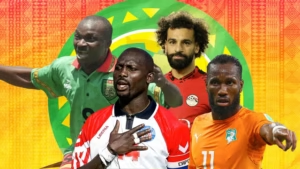
Today’s superstars; Mohamed Salah, Sadio Mané, Riyad Mahrez, Victor Osimhen, Achraf Hakimi, Asisat Oshoala are following in the footsteps of past greats like George Weah, Didier Drogba, Yaya Touré, Samuel Eto’o, Roger Milla, Abedi Pele who represented the pinnacle of African football development.
Persistent Challenges
Despite enormous progress, African football still faces:
• Infrastructure gaps
• Financial instability
• Governance issues
• Limited access to elite facilities
• Uneven youth development structures
Future Opportunities
The future is bright, driven by:
• Expansion of women’s football
• Improved football academies
• Data analytics and modern coaching
• Growing commercial investment
• Stadium renovation and construction
• Greater participation in global tournaments
Africa’s football voice is only getting stronger.
Conclusion: A Legacy Still Growing
From colonial ports and informal street games to packed stadiums and world-class championships, football in Africa has undergone an extraordinary transformation.
Clubs like Al Ahly, Hearts of Oak, Kotoko, Espérance, TP Mazembe, and Enyimba forged regional identities. National teams united nations, and historic matches shaped continental memory.
Today, Africa stands as one of the world’s most passionate football regions. A place where the game is not just played, but lived.
The legacy continues to grow, fuelled by talent, community spirit, and a future filled with possibility.