African football is turning a corner history once believed would take generations longer.
For decades the continent exported extraordinary talent, fuelled the global game with cultural energy, and produced players who shaped world football’s defining moments.
But Africa seldom controlled the narrative, the infrastructure, or the economic ecosystem around the sport it helped globalise.
That era is closing.
The next generation will not remember Africa as football’s raw talent factory alone.
They will see a continent that develops its own stars, powers its own leagues, negotiates its own broadcast value, births its own coaches, and competes with the world as an equal — commercially, tactically, and competitively.
This is the age where Africa stops feeding football, and starts leading it.
Africa: Football’s Last Untapped Superpower
Europe owns football’s industry.
South America owns football’s mystique.
Africa owns football’s future.
No other region blends youthful population growth, accelerating infrastructure, global diaspora influence, natural athletic depth, expanding digital consumption, and rising commercial investment like Africa does today.
While Europe remains football’s economic capital and South America the sport’s spiritual reference point, Africa is now football’s final frontier — the continent with the highest upside, the deepest undiscovered reserves, and the most transformative potential.
The question is no longer whether Africa will rise, but how soon the global power balance will tilt.
Demographics: A Continual Talent Renaissance

Africa’s population has crossed 1.3 billion — and more than 60% of the continent is under 25. That makes it the youngest region on Earth, and the youngest it will ever be.
Football implications:
- More emerging players than any other continent
- More untapped local talent markets
- More scouts entering Africa than leaving Europe or South America
- A growing fanbase that will shape future global broadcast economics
- A long runway of generational football cycles crowding one another
If talent were energy, Africa is a renewable source.
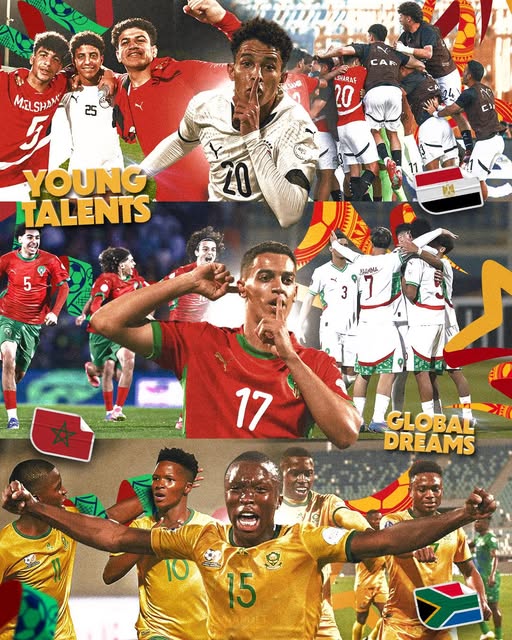
The continent is no longer producing one golden generation per decade — it is producing overlapping waves of elite prospects who challenge age categories, redefine early development, and reach professional readiness earlier than ever.
For the first time, Africa’s footballing depth is exceeding its own ability to export it quickly enough.
From Export Pipeline to Value Creation Economy
For decades, African football operated under a predictable model:
- Players emerge in informal or underfunded environments
- Scouts pull them offshore early
- Europe finishes development
- Africa receives pride but minimal financial return
That model is breaking.
The evolution looks like this instead:
- Players are trained locally in structured environments
- Tactical development begins earlier
- Transfers happen later, at higher valuation
- African clubs negotiate with leverage
- Sell-on clauses and long-term rights generate reinvestment back home
- Domestic leagues retain stars longer
- Local markets grow instead of feeding foreign ones exclusively
Africa is ascending from talent exporter to football economy builder.
The Academy Boom: Africa’s New Industrial Complex

Stadiums symbolise football.
Academies secure football’s future.
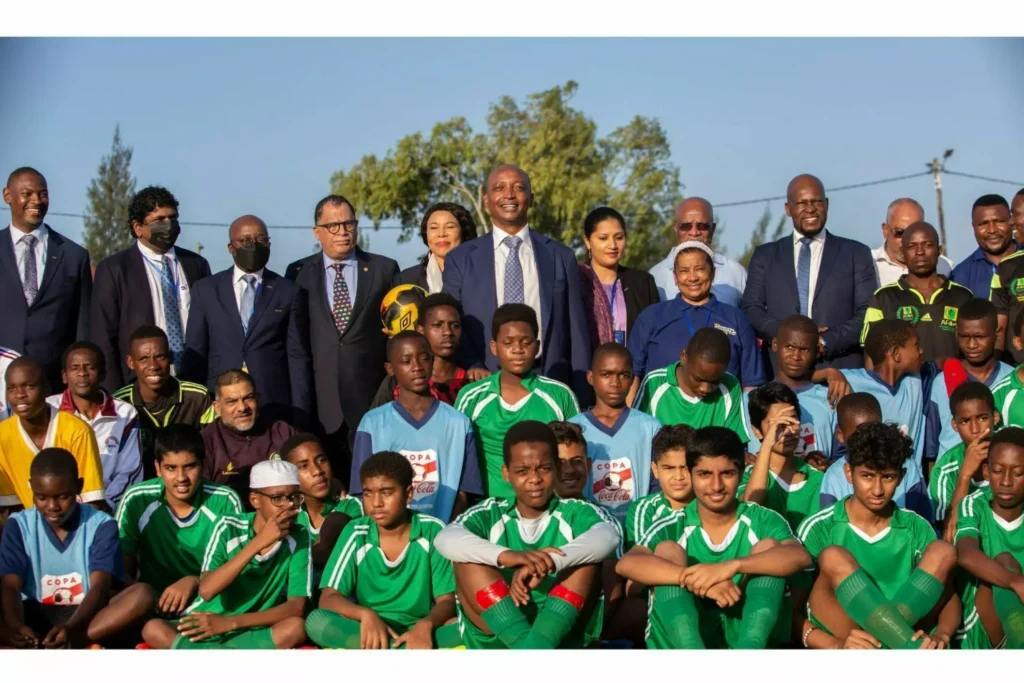
The continent is in the middle of its most significant technical transformation ever — the rise of football development ecosystems built outside traditional federation control.
What modern African academies now include:
| Category | New Standard in Africa |
|---|---|
| Education | Schooling integrated with football training |
| Health | Sports medicine, nutrition, recovery science |
| Tech | GPS tracking, match analytics, digital scouting |
| Pathway | European partnerships and talent pipelines |
| Coaching | UEFA and CAF licensed development frameworks |
| Psychology | Mental conditioning and performance support |
The result?
African prospects are arriving in Europe more complete, more tactically aware, and more physically ready than ever before.
They are no longer projects — many are solutions.
Examples of academy evolution hubs:
- Senegal – tactical and developmental structure
- Morocco – technical refinement and elite coaching platforms
- Ghana & Nigeria – raw talent refining and export ecosystems
- Ivory Coast & Cameroon – athletic development and physical polish
- South Africa – performance science and medical infrastructure
Africa is finally educating its talent at the source of origin, not at the point of extraction.
Infrastructure: From Limitation to Leverage
For decades, the gap between African football and the rest of the world was not talent, passion, or creativity — it was infrastructure.
That argument is losing validity by the year.
Infrastructure growth indicators:
- Next-generation stadiums with hybrid turf and broadcast design
- National training centres replacing improvised camp systems
- Medical performance facilities rivaling European recovery protocols
- Increased private financing over government dependency
- Better logistical organisation around national teams
- More FIFA-standard club licensing enforcement
Some national complexes in Africa now resemble mini football cities — combining housing, analytics, gyms, classrooms, recovery, tactical theatres, and medical units under one operational roof.
The deficit once used to explain Africa’s limitations is steadily becoming one of its competitive tools.
AFCON: From Continental Pride to Global Showpiece

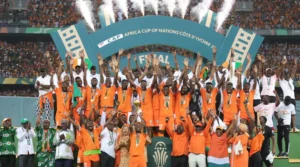
The Africa Cup of Nations is no longer a regional tournament — it is a global product with continental ownership.
Its transformation has rewritten football consumption patterns:
- Huge global viewership numbers
- Commercial partnerships rising in value
- European clubs planning around AFCON, not objecting to it
- Competitive quality closing the gap on international elite football
- Broadcast rights demand expanding beyond traditional markets
AFCON’s new power isn’t symbolic — it’s structural.
The tournament influences transfer valuations, player branding trajectories, tactical innovations, and managerial reputations. Careers are not just launched there anymore — they are redefined there.
National Teams: The Competitive Landscape Has Changed

African football once had a small circle of perennial heavyweights. Today the pyramid is flattening — and rising.
Yesterday’s hierarchy:
- 3–5 dominant nations, occasional disruptor
Today’s reality:
- 12–15 competitive nations capable of beating one another
- Tactical identity rising across regions
- Mehr structured federation planning
- Greater coaching competence
- Better game management
- Far fewer mismatched qualification fixtures
Countries once considered unpredictable outsiders now plan in multi-year cycles with defined targets:
- Morocco built a tactical system, not a moment
- Senegal built stability, not a team
- Nigeria built depth, not just a first XI
- Egypt built continuity beyond legacy
- Ivory Coast rebuilt through youth dominance
- Mali, Burkina Faso, Cape Verde, Equatorial Guinea became strategic disruptors
- South Africa, Tunisia, Algeria showed tactical maturity
- Zambia, Angola, Tanzania, DR Congo pushed competitive thresholds upward
No tournament berth is ceremonial anymore. Nearly every African qualifier now arrives hoping to win, not participate.
Tactical Evolution: The End of Stereotypes
African football carried a long-standing narrative:
- Powerful
- Fast
- Explosive
- Unpredictable
- Emotion-led
- Tactically unrefined
Those descriptions were never insults, but they were incomplete.
Today’s Africa:
- Builds in possession
- Uses structured pressing triggers
- Defends in collective blocks
- Manipulates phases instead of all-action transitions
- Manages game state instead of surviving it
- Uses midfield control, not midfield chaos
- Applies analytics to shape tactical decisions
Modern continental tactical identity markers:
| Region | Emerging Tactical Identity |
|---|---|
| North Africa | Game management, technical build-up, positional structure |
| West Africa | Hybrid power football blending technique and physicality |
| East Africa | Collective organisation and pressing discipline |
| Central Africa | Transition speed and athletic dominance |
| Southern Africa | Tactical fluidity and possession patience |
Africa is no longer stylistically undefined.
It is tactically plural.
Dual Nationality: Africa’s Quiet Competitive Weapon
One of the continent’s most impactful developments is not domestic — it’s global.
Millions of players of African heritage grew up in Europe, educated in elite football systems, exposed to tactical structure from childhood, and technically trained at the highest level.
Many now choose to represent the continent of origin.
This reshapes everything:
✅ Higher technical standards within national teams
✅ Greater tactical intelligence transfer into the squad
✅ Bigger global fan connection through diaspora identity
✅ Wider commercial visibility
✅ Higher competition for squad places
✅ More strategic depth for international tournaments
Africa no longer relies only on home-grown development. It now taps into a global network of football education shaped by its own diaspora.
Women’s Football: Africa’s Fastest Rising Asset
If men’s football in Africa is accelerating, women’s football is skyrocketing.
Key shifts:
- CAF growing women’s tournaments beyond token scheduling
- More professional clubs creating women’s teams
- Increased broadcast commitments
- Rising fan attendance and digital engagement
- African players earning big transfers to Europe and the US
- National teams gaining tactical and physical identity
- Sponsorship interest expanding annually
Front-runners in women’s football advancement:
- Nigeria – historical dominance and talent pipeline
- South Africa – tactical identity and progression model
- Zambia – fast rising competitive force
- Morocco – infrastructure investment and development
- Ghana, Cameroon, Senegal – expanding domestic potential
Women’s football in Africa is not following the global curve.
It is racing past it.
The Business of Football: Africa’s Commercial Awakening
Football wealth in Africa has been present for decades — but football profit has not. That is starting to shift.
Key commercial pillars now expanding:
| Area | Africa’s Growth Trend |
|---|---|
| Broadcasting | More multi-million dollar rights deals |
| Club sponsorships | Global brands competing for space |
| Digital content | Local platforms driving fan engagement |
| Merchandising | Rising demand for official club and national kits |
| Ticket revenues | Higher stadium attendance monetisation |
| Player valuation | Increased transfer market leverage |
| Private investment | More private ownership entering football |
Africa is no longer just the audience.
It is becoming the market.
Coaching: The Next Frontier
Africa once exported players and imported coaches.
The next wave flips the script.
More African managers are:
- Coaching abroad
- Winning trophies
- Handling elite squads
- Bringing tactical credibility
- Becoming candidates, not placeholders
- Leading national teams based on merit, not nationality optics
Developing African coaches is the final frontier in football autonomy.
When African football exports coaches at the same rate it exports players, full competitive equality will be realised.
Domestic Leagues: The Sleeping Giants Stirring
Africa’s leagues always had passion.
Now they are gaining structure.
Defining changes underway:
- Multi-year commercial broadcast deals
- Better calendars and competition structure
- Improved club licensing requirements
- Increased veteran player retention
- Higher sponsorship visibility
- Investment in stadium matchday experience
- Strategic branding and digital reach
Domestic leagues on the rise:
South Africa
Morocco
Egypt
Algeria
Tunisia
Nigeria (scale potential unmatched)
Tanzania
Sudan
Kenya
Africa’s domestic leagues will not replace Europe.
But they no longer exist for Europe.
Technology and Data: The Invisible Revolution
Football in Africa once ran on instinct.
Now it runs on information.
New standard tools:
- GPS motion tracking
- Match performance analytics
- Opposition behaviour modelling
- AI tactical prediction engines
- Injury risk probability mapping
- Advanced player profiling systems
- Data-driven recruitment
- Market value intelligence platforms
Africa is adopting football intelligence, not just football energy.
What African Football Will Look Like by 2040
If momentum continues, expect to see:
✅ Africa producing 5 of the world’s top 20 players simultaneously
✅ Multiple African teams ranked in FIFA’s top 10 at the same time
✅ The first African World Cup semi-finalist or finalist
✅ One of the world’s top 6 most valuable domestic leagues
✅ African coaches managing elite national teams globally
✅ An African club winning an intercontinental championship
✅ AFCON rivalling Copa América commercially
✅ Africa negotiating global football policy with leverage
✅ Player retention cycles lasting longer than 18–24 months
✅ African tactical identity influencing global trends
This is not aspiration.
It is trajectory.
Conclusion: Africa Is No Longer Coming — It Has Arrived
The future of African football is no longer a promise. It is a visible movement measured by investment graphs, tactical evolution, transfer markets, infrastructure expansion, coaching credibility, commercial appetite, digital engagement, and youth pipelines that will keep reproducing elite talent long after current generations retire.
Football did not wait for Africa to rise.
Africa grew until football could no longer ignore it.
The next chapter belongs not to those predicting Africa’s moment — but to those preparing for its domination.