Introduction — The Birth of Football in Africa
Football arrived in Africa through European merchants, colonial officials and missionaries in the late 19th century. African coastal cities quickly saw local matches.
By 1957 the Africa Cup of Nations (AFCON) presented its first edition with only three nations—Egypt, Sudan, and Ethiopia (South Africa having been disqualified). A sign of the sport’s grassroots foothold on the continent (Britannica, “Africa Cup of Nations”, britannica.com).
Origins of the Game on the Continent
Colonial powers played a large role. British, French and Portuguese administrators introduced football clubs and leagues in their colonies.
In the Gold Coast (now Ghana), merchants brought the game; the Accra Hearts of Oak club formed in 1911 and Asante Kotoko in 1935. These early clubs laid local foundations (Ghana FA History, ghanafa.org).
Football became “the people’s sport” because it required little equipment, could be played in informal settings and became one of the few inclusive public pastimes in colonised societies.
Early Development of African Football
From street games to organised teams, football in Africa matured over decades.
Formal associations emerged: the Gold Coast Amateur Football Association was established in 1952, evolving into the modern Ghana Football Association (GFA) after independence (Ghana FA History, ghanafa.org).
In February 1957 the Confederation of African Football (CAF) was founded in Khartoum, and just days later the first AFCON kicked off, marking the first milestone in organised continental competition (CAF Official History, cafonline.com).
Professionalisation followed slowly: national leagues, international tournaments, and infrastructure investment gradually transformed the game from informal pastime to industry.
Key Clubs that Shaped African Football
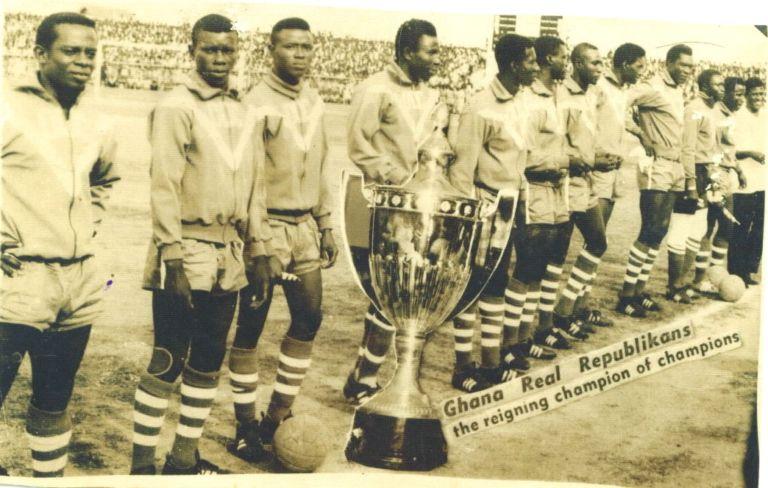
Clubs became the bedrock of football culture in Africa. In North Africa, clubs like Al Ahly SC (Egypt) and Esperance Tunis (Tunisia) dominated regionally. In West Africa, Accra Hearts of Oak and Asante Kotoko produced talent and rivalry (Ghana FA History, ghanafa.org).
Domestic rivalries ignited fan culture. These clubs anchored communities, created legends and fed the national teams. Club success also spurred continental competitions and raised standards.
Building the Game — Infrastructure and Organization
Stadiums, training centres and leagues arrived incrementally. Governments and CAF played major roles: nations built arenas to host tournaments; CAF set standards for competitions and membership (Britannica, “Africa Cup of Nations”, britannica.com).
Modern football academies and youth programmes are now integral. CAF’s launch of the Women’s Champions League in 2021 and the African Schools Football Championship highlight significant expansion in women’s football participation, coaches and referees (CAF Official History, cafonline.com).
The organisation around football moved from informal fields to structured national leagues and continental frameworks.
Famous Matches and Iconic Championships
Classic matches defined eras. The 1957 inaugural AFCON, won by Egypt in a three-team field after a 4–0 final victory over Ethiopia, laid the template for continental rivalry (How the AFCON evolved, cafonline.com).
When North African and West African sides began winning regularly, the tournament’s status soared. Clubs like Al Ahly became continental forces in the CAF Champions League and Super Cup competitions.
African nations and clubs also broke into global consciousness — the rise of African players, clubs and international performances gave the continent a louder football voice.
Football as a Cultural and Social Force
Football unites communities and nations. In many African countries the game cuts across ethnicity, class and region. It influences music, fashion and identity. Supporting a local club is a badge of belonging.
Football for many Africans carries symbolic weight: national teams play not just for victory, but for pride, hope and recognition on the world stage.
Legacy and the Modern Era
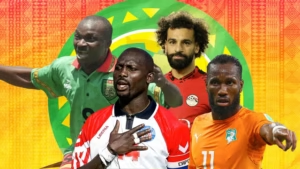
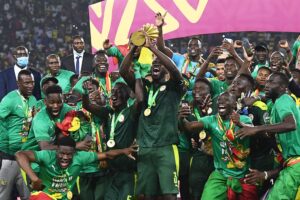
Today African football enjoys global recognition. The Africa Cup of Nations has grown from three nations to 24 teams since the 2019 expansion (How the AFCON evolved, cafonline.com).
A new generation of players dominate European leagues and global competitions. Yet challenges remain: infrastructure gaps, governance issues and finance shortfalls persist. Opportunities also loom: women’s football is growing fast, youth development is expanding and Africa’s football voice is stronger than ever.