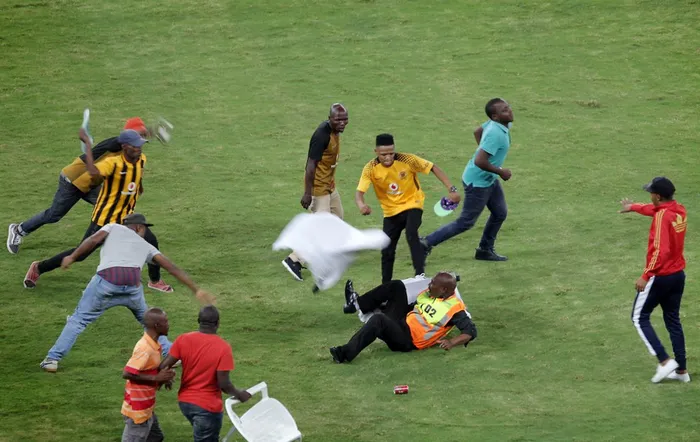
Football hooliganism in Africa grew from passion, identity, politics, rivalry, and unresolved social pressure.
Supporters love the game, but emotions sometimes explode into violence, property damage, and mass disorder.
African stadiums don’t always show chaos, but past events prove the threat exists (CAF Safety Report).
Clubs, national teams, and fan groups carry local pride tied to politics, tribe, history, and territory.
Conflicts outside football sometimes explode inside stadiums because football gives anger a public voice.
Hooliganism doesn’t define Africa, but African football must confront it with long-term solutions.
The Roots of Hooliganism in African Football
Football culture grew with Africa’s independence era and national pride.
Governments and movements used football to express identity and resistance.
Rivalry matches started to represent deeper political and social tensions.
Egypt and Algeria’s 2009 World Cup qualifier ignited national tension, protests, and diplomatic crisis (BBC Sport, 2009).
Security forces struggled, fans clashed, and both countries traded political statements.
In Tunisia, football anger often blends with social dissatisfaction and mistrust in institutions .
Security forces and fans sometimes clash because tensions already exist outside stadiums.
South Africa’s biggest derby, Kaizer Chiefs vs Orlando Pirates, recorded multiple crowd disorder incidents .
Sudan’s El Hilal vs Al Merrikh derby carries decades of confrontation and stadium clashes (Reuters, 2018).
North Africa formed ultra supporter movements that sing, protest, and challenge authorities.
Egypt, Morocco, Tunisia, and Algeria all report ultra groups influencing social and political protest (Al Jazeera, 2013).
These fan organizations sometimes clash with security during high-pressure games.
Top Triggers Behind Stadium Violence
Refereeing decisions trigger anger faster than any other factor .
Fans often believe bad calls equal bias, conspiracy, or regional injustice.
A single wrong call can change stadium mood instantly.
Poor stadium infrastructure also increases risk (FIFA Stadium Safety Guidelines).
Overcrowding, blocked exits, limited lighting, and weak crowd control raise panic chances.
Ticketing confusion creates conflict long before kick-off.
Some fans link club identity to ethnic, political, or neighborhood territory .
Losses can feel personal and symbolic, not just sporting defeat.
Social media accelerates anger, spreads rumors, and mobilizes crowds without proof.
Economic frustration also adds fuel.
Stadiums sometimes become pressure valves for unemployed youth with limited public outlets.
Football becomes emotion, identity, protest, and sometimes conflict all in one space.
Major Incidents That Shaped the Debate
In 2012, 74 fans died in Port Said after Al Ahly played Al Masry .
Fans invaded the pitch, exits closed, and violence spread without control.
It remains one of Africa’s worst football tragedies (Amnesty International, 2012).
In 2001, Ghana recorded 127 deaths at Accra Sports Stadium after tear gas caused mass panic (Theguardian, 2001).
Accra Hearts of Oak and Asante Kotoko rivalry often demands maximum security planning.
Libya recorded repeated stadium unrest during political instability.
DR Congo’s Vita Club vs TP Mazembe games saw multiple pitch invasions and stadium damage.
Algeria experienced fatal stadium clashes during the 1990 league season .
Kenya’s AFC Leopards vs Gor Mahia derby produced violence, injuries, and mass arrests.
Nigeria league games have logged crowd assaults, object throwing, and security confrontation .
Cameroon domestic games also reported referee intimidation and fan riots.
Every major incident shows warning signs long before the breaking point.
The Cost of Hooliganism
Sponsors retreat when stadiums signal danger instead of opportunity.
Brands want engagement, not crisis headlines.
Federations suffer fines, sanctions, and stadium bans .
Clubs lose ticket revenue and play games behind closed doors.
Families avoid stadiums when safety becomes uncertain.
Talented players exit domestic leagues early to avoid unstable playing environments.
Broadcasters lose commercial value when violence interrupts coverage.
Football loses its strongest weapon, solidarity, when chaos replaces joy.
Fan violence blocks tourism, sponsorship, and long-term football investment.
Stadium bans increase, attendance drops, and federations pay reputational costs.
Reactions from Governments and Football Bodies
CAF now prioritizes stadium security training and match risk assessment.
CAF imposes fines, stadium closures, and competition bans to punish crowd misconduct.
Police units shift toward layered crowd separation instead of only force-based control.
Ghana mixes police and stewards for major match security.
Egypt, Morocco, Tunisia, and Algeria hold dialogue forums with supporter group leaders.
South Africa uses multi-agency planning for high-risk derbies.
Kenya improved stadium surveillance, fencing, and crowd flow design.
Nigeria strengthened entry screening and emergency response planning.
Solutions That Can Change the Future
Football bodies must teach supporter culture, respect, and rivalry ownership early in schools.
Fan education must run year-round, not only after disasters.
Governments must treat stadium safety like national infrastructure policy.
Clubs need supporter liaison teams that speak fan language, not institutional language.
Exclusion creates rebellion, but inclusion creates responsibility.
Digital ticketing can track offenders and limit repeat access.
CCTV, entry scanners, and biometric verification raise accountability.
Referee transparency reduces conspiracy narratives that fuel anger.
VAR education campaigns must help fans understand decisions faster.
African leagues must create supporter codes with penalties and positive behavior incentives.
CAF must praise good supporters as loudly as it punishes bad behavior.
Former players and football icons must push anti-violence messaging frequently and publicly.
Football must champion rivalry without promoting enemy culture.
The Future African Football Must Protect
Hooliganism doesn’t represent Africa’s football majority.
Millions attend games peacefully with loyalty, music, and celebration.
Africa carries one of the loudest, most artistic, and most colorful football cultures on earth.
Drums, chants, murals, dance, and stadium art prove football unites more than it divides.
Violence threatens the culture, but unity protects it.
African football needs passion with responsibility.
Noise without harm.
Rivalry without hatred.
Identity without division.
Competition without destruction.
Africa’s game deserves full stadiums, safe moments, and unforgettable memories for the right reasons.