Understanding Manchester United’s ‘DNA’: Is it Significant?
Manchester United’s Quest for a New Manager
Manchester United is on the lookout for a new manager following the dismissal of Ruben Amorim. This situation has reignited the conversation surrounding the need for a successor who embodies the club’s “DNA.” This term has become a safety net in challenging times, often evoking nostalgia for more victorious periods.
The Call for Adherence to Club Tradition
In light of Amorim’s exit, former United player Gary Neville has suggested that the club requires a manager that aligns with its foundational principles. The importance of club identity isn’t restricted to Manchester United alone; former Liverpool forward John Aldridge expressed similar sentiments after his team’s lackluster performance against Leeds United, lamenting the apparent loss of their own “DNA.”
This concept reflects the need to revert to the core values and successful strategies that define a club’s rich history. In this context, decision-makers at United, including minority owner Sir Jim Ratcliffe, are reportedly considering individuals with deep-rooted connections to the club for an interim managerial position.
Potential Candidates with Strong Ties
Among the candidates being evaluated are Darren Fletcher, who recently took charge at Burnley, alongside former managers Ole Gunnar Solskjaer and Michael Carrick. Collectively, these figures boast a successful legacy, with Fletcher and Carrick amassing a total of 10 Premier League titles, while Solskjaer secured six and etched his name in history with a dramatic goal in the 1999 Champions League final.
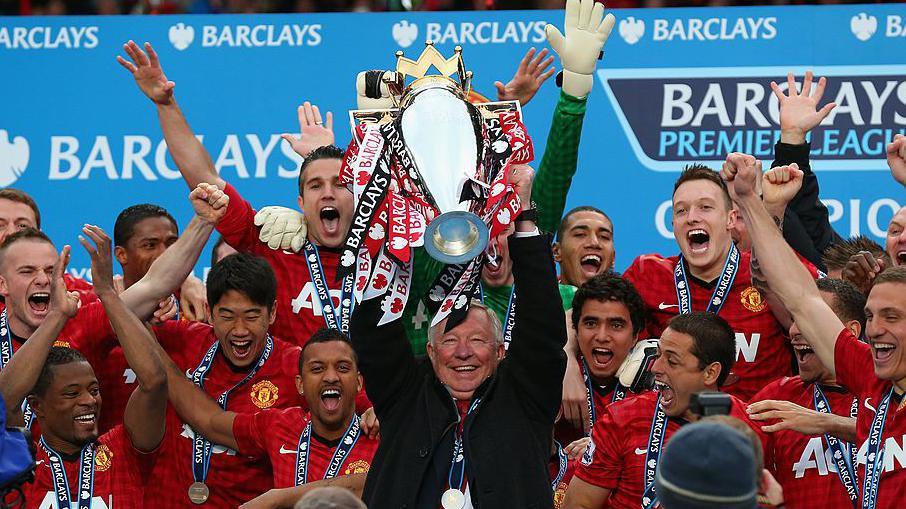
In an interesting move, Fletcher sought the approval of legendary manager Sir Alex Ferguson before stepping into a temporary leadership role, highlighting the continuing influence Ferguson has even years after his retirement.
The Question of Ferguson’s Legacy
Sir Alex Ferguson is celebrated for his remarkable achievements, including 13 Premier League titles and multiple European triumphs. However, the debate persists—does the club still require Ferguson’s “blessing” to regain its essence after so many years? And can simply seeking his approval reignite the fading “DNA” of Manchester United?
Former goalkeeper Peter Schmeichel brought an interesting perspective to this discussion, pointing out that United has experimented with several renowned managers, yet results have often faltered. He argues that a successful approach must align closely with the unique style that defines Manchester United’s football philosophy.
What is a Club’s ‘DNA’?
Club “DNA” is often seen as an intrinsic quality—the signature style and emotional connection evoked by merely uttering the club’s name. Neville articulated this concept, stating that Manchester United should maintain its core identity, akin to Barcelona, which steadfastly adheres to its principles.
Historical Context and Young Talent
United’s style has historically encompassed an emphasis on fast-paced, attacking football while promoting young talent—a principle dating back to the era of Sir Matt Busby. The initiatives like the “Busby Babes” and the legendary “Class of ’92,” which included famous players such as David Beckham and Ryan Giggs, are hallmarks of this tradition. However, with many figures from those eras now entrenched in media scrutiny, the dialogue around club identity has intensified.
Which Clubs Exemplify a Strong ‘DNA’?
Supporters often define whether clubs possess a genuine “DNA.” For instance, both Manchester United and Liverpool fans believe they understand their clubs’ identities, characterized by deep connections with their teams and a shared emotional experience that transcends the pitch.
Barcelona’s philosophy, which focuses on possession, derived from Johan Cruyff’s tenures as both player and coach, echoes in the successful tactics of coaches like Pep Guardiola. Meanwhile, Ajax’s style, rooted in the ‘Total Football’ developed by Rinus Michels, remains steadfast and largely unchanged, reflecting a long-standing commitment to developing homegrown talent.
Conversely, clubs like Real Madrid and Bayern Munich prioritize winning above all, while modern entities like Manchester City and Paris St-Germain focus more on achieving success regardless of a distinct playing style.
Is Club ‘DNA’ a Romantic Notion?
The discourse surrounding “DNA” often teeters on the edge of sentimentality. While managers like Mourinho experienced temporary success, they were often criticized for straying from the core values associated with Manchester United. The reality is that only a few individuals—like Ferguson and Liverpool’s Bill Shankly—have been able to cultivate a connection that resonates strongly with the concept of “DNA.”
The Realities of Modern Football
Calls for Manchester United to reconnect with their roots are certainly valid; however, finding the leader capable of restoring that identity remains a challenge. The contemporary football landscape suggests success hinges on having charismatic personalities and world-class talents, attributes that are notably rare, as exemplified by the unique legacy of Sir Alex Ferguson.
In essence, the search for a club’s “DNA” may continue to be shrouded in romanticism, but discerning how to achieve it in a modern context is key to moving forward.