Bundesliga at AFCON: Focus on Benin and Congo DR
Our upcoming segment on the “Bundesliga at AFCON” delves into the journeys of Benin and the Democratic Republic of Congo (DR Congo). The current situation of these two nations provides plenty to discuss, and we’ll stretch the rules a bit for our analysis. Although Augsburg striker Steve Mounie, representing Benin, is currently on loan at Alanyaspor, we will include him as a Bundesliga player. This choice is driven partly by dissatisfaction over his loan, which many view as one of the least wise decisions made by any Bundesliga club during the last transfer period.
Benin: “The Cheetahs”
There’s a tinge of regret in the air as the narrative has shifted from the endearing “Squirrels” to the current “Cheetahs.” This change feels less charming, especially when recalling Benin’s surprising run to the AFCON quarterfinals in 2019, characterized by a series of draws. Historically, Benin has struggled in this competition, failing to secure a victory. In three previous tournaments (2004, 2008, and 2010), they faced elimination during the group stages.
Insights on Beninese Players in Germany
Benin, a densely populated West African nation, has produced numerous players who have ventured into the Bundesliga. Notably, Gernot Rohr is the third German national coach to lead the Beninese team, following Reinhard Fabisch. In the late 1990s and early 2000s, Moudachirou Amadou and Moussa Latoundji played for Energie Cottbus, which fluctuated between the top two tiers. Amadou also spent years in the east with Aue while Mickaël Poté enjoyed a brief stint with Dynamo Dresden.
A handful of other players have also had spells in Germany or neighboring countries. Dinalo Adigo, a former Beninese international, has a son, Ryan, who played in the east and recently earned a national cap. Notably, Cebia Soukou, who played for Rostock during the 2019 squad, made headlines for scoring in the opening match of the 2020/21 season for Arminia Bielefeld, marking the only goal of his brief career in the top flight.
There was hope to see St. Pauli’s Andreas Hountondji shine at this tournament, but he opted out due to a thigh injury, which hindered his early-season success where he scored three goals in his first three league matches. His last appearance, against Bayern Munich, saw him suffer an injury that subsequently sidelined him.
AFCON Representatives from Benin
Steve Mounie, FC Augsburg
At 31, Mounie appeared to be in excellent shape during FCA’s training camp, raising expectations for his contributions. However, his loan spell in Turkey has not been fruitful; he has yet to make an impression, failing to score in seven Super Lig matches while battling a knee injury. Despite his challenges at the club level, Mounie remains influential for his nation, having scored twice during the September international break. With a total of 22 goals for Benin, he is closing in on becoming the country’s all-time leading scorer, potentially surpassing Stéphane Sességnon.
Congo DR: “The Leopards”
The Leopards aim to add another remarkable chapter to their rich footballing history. Under Sebastian Desabre’s management, they reached the semi-finals of the 2023 tournament, buoyed by a standout performance from former VfB Stuttgart player Silas. Unfortunately for German fans, the anticipated return of “Silas” is unlikely, prompting a focus instead on Samuel Essende.
Insights on Congolese Football in Germany
Historically, there has been a connection between Germany and the Congolese national team, particularly since their World Cup participation in 1974. At that time, Zaire was their official name and marked the last time they won the AFCON title. Kakoko Etepé, a figure in both the World Cup and AFCON success, was a pioneer for Congolese footballers in Germany. After starting with Stuttgart, he moved to Saarbrücken, where he significantly influenced the sport.
Etepé’s journey reflects the struggles faced by many African players who arrived in Germany during the 1980s, often starting their footballing career alongside other jobs. His story remains inspirational, as he eventually made a Bundesliga appearance after years of persistence.
Support for Congolese footballers amongst German fans surged due to competitors like Cedric Makiadi, who capped his career on a high note with a third-place finish in 2015, as well as the notable performances of players like Marcel Tisserand and Chadrac Akolo in subsequent tournaments.
AFCON Representatives from Congo DR
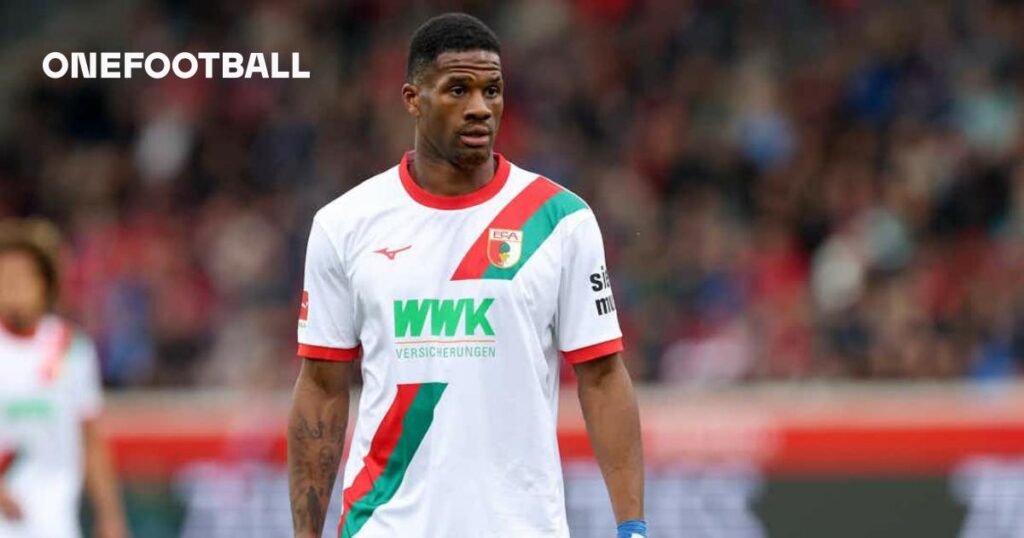
Samuel Essende, FC Augsburg
Essende qualifies as a Bundesliga representative for AFCON, though his status as a significant player is under scrutiny. He was sidelined for the initial Bundesliga matches of this season due to a ban but managed to score in one match after coming off the bench. However, he has yet to start another game or contribute additional goals. Observations during live matches reveal that he seems to be struggling with the fundamentals of his role.
The management of strikers at Augsburg raises eyebrows, particularly with players like Nathanaël Mbuku, who, after being bought back and subsequently loaned out to Montpellier, is performing well in France and recently scored for his country. Should Mounie excel against Congo while Mbuku garners more playing time than Essende, it would underline the questionable decisions made by Augsburg’s coaching staff during the offseason.