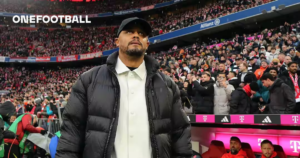
The Ongoing Referee Controversy Involving FC Bayern
The issue of officiating related to FC Bayern continues to escalate. Following the Bundesliga match in Leverkusen, the unusually severe remarks from the management in Munich have drawn significant attention and prompted inquiries into the underlying motivations.
Controversial Referee Decisions
Key incidents being scrutinized include a disallowed goal by Harry Kane and a yellow-red card issued to Luis Díaz. The responses from Munich were unmistakable—perhaps excessively so, according to some analysts.
Surprising Reactions
Stefan Kumberger, a reporter for SPORT1, expressed his astonishment regarding the strong criticism articulated in the podcast Die Bayern-Woche. He remarked, “I was taken aback by the vigorous disapproval from Bayern’s leadership.”
It is noteworthy that the critique was not only delivered immediately after the match but also was actively promoted thereafter. Kumberger interprets this as evidence that the statements went beyond mere emotional reaction.
Offensive Communication Strategy
Bayern’s choice to adopt a confrontational communication style, including reaching out to the DFB, is not typical behavior in the Bundesliga.
Is There a Broader Strategy?
This development prompts a more intriguing discussion. Kumberger posits that the public disapproval may be part of a larger plan. He suggested, “Perhaps Bayern aimed to apply pressure on the referees.”
The anticipated outcome could be favorable decisions for Bayern in the future—or at the very least, more cautious officiating against them. Kumberger pointedly stated, “It should become more challenging for a referee to penalize Bayern.”
This theory raises significant concerns, as it implies that public discontent is being strategically used to sway officiating decisions.
Potential Risks of This Approach
At the same time, Kumberger highlights possible drawbacks of taking such a stance. By portraying the situation unilaterally, Bayern risks alienating themselves. “No other entity in the sports community can align with Bayern now, given that they have fixated solely on this issue,” he remarked.
Furthermore, he believes there isn’t a prevailing pattern that validates such aggressive criticism. Refereeing issues are widespread and not exclusive to FC Bayern.
Especially when considering Bayern’s current position—dominating the league—Kumberger wonders if a different, more measured approach could have been feasible. “Bayern had the opportunity to convey: ‘We’re indifferent,’” he stated.
Instead, the club opted for a confrontational route with unpredictable repercussions. What is clear, however, is that the declarations from Munich have reignited discussions about refereeing, potentially influencing outcomes well beyond the match in Leverkusen.