African football has long been a source of pride, joy, and inspiration.
Across decades, the continent has produced players whose skill, resilience, and flair have captivated fans worldwide.
These legends are more than athletes; they are symbols of hope, identity, and triumph.
From humble beginnings to global stardom, African football icons have shaped the sport and left indelible marks on its history.
This article highlights ten of Africa’s most influential footballers, exploring their journeys, achievements, and legacies.
These icons redefined the game, inspired future generations, and transformed African football into a global powerhouse.
The Rise of African Football Legends
African football legends are defined not only by statistics but also by their cultural, social, and historical impact. Key criteria include:
- Performance in domestic, continental, and international tournaments
- Contribution to national team success
- Pioneering achievements in European and global football
- Inspiration for youth and future stars
- Influence on African football culture and identity
The rise of African legends has coincided with the growth of football infrastructure, academies, and leagues on the continent.
Their stories often intertwine with the evolution of African football itself, reflecting social, political, and economic transformations.
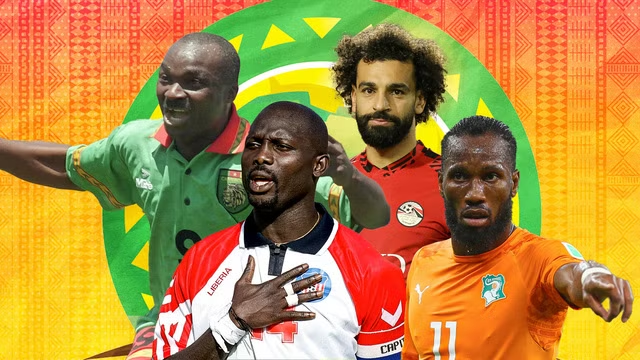
1. George Weah (Liberia) — The Trailblazer
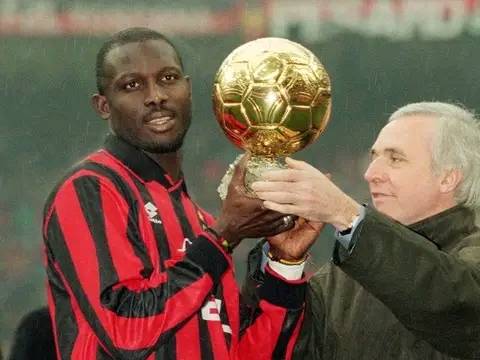
George Tawlon Manneh Oppong Weah is synonymous with African football excellence.
Born in Monrovia, Liberia, Weah rose from a challenging childhood to become the only African to win the Ballon d’Or (1995).
His journey exemplifies resilience, talent, and leadership.
Early Life and Career
Weah’s football journey began in Liberia, playing for local clubs before moving to Cameroon’s Tonnerre Yaoundé.
His performances in domestic and continental competitions attracted European attention, leading to stints in AS Monaco, Paris Saint-Germain, AC Milan, Chelsea, Manchester City, and Marseille.
Playing Style
Weah combined speed, strength, and technical ability, making him one of the most formidable strikers of his era.
His dribbling, finishing, and ability to score in critical moments earned him recognition as a global superstar.
Achievements and Legacy
- Ballon d’Or (1995) — first African winner
- African Footballer of the Year (1989, 1994, 1995)
- Led Liberia to multiple AFCON qualifications
- Later became President of Liberia, demonstrating influence beyond football
Weah’s impact transcends football. He inspired generations across Africa to pursue dreams despite adversity, symbolizing hope, excellence, and leadership.
2. Samuel Eto’o (Cameroon) — The Trophy Machine
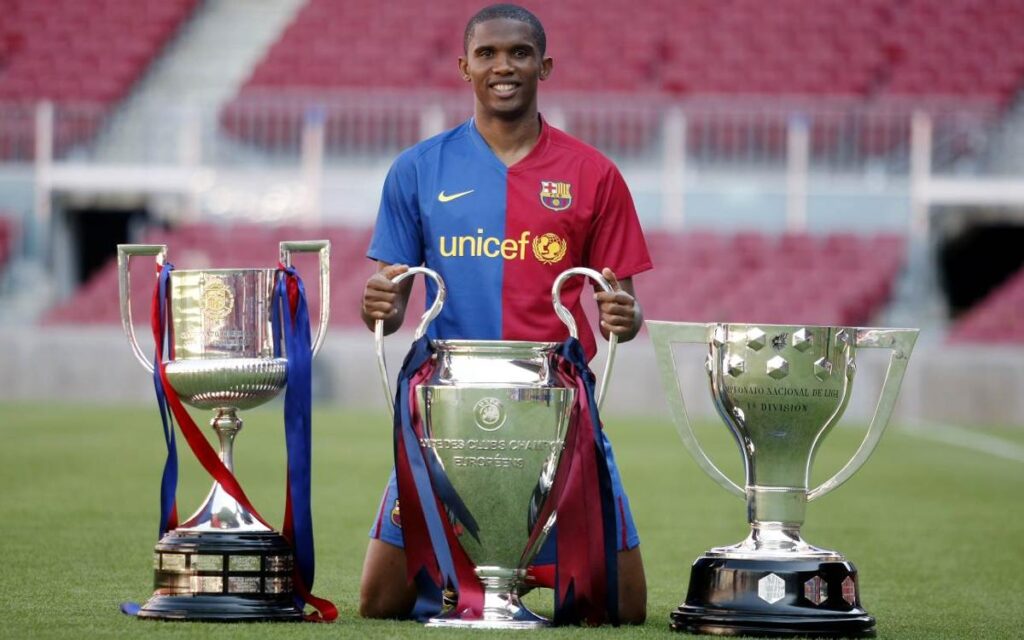
Samuel Eto’o Fils is widely regarded as one of the most decorated African footballers in history.
Renowned for his clinical finishing, versatility, and determination, Eto’o’s career spanned Europe’s elite clubs and Cameroon’s national team.
Early Life and Rise
Born in Douala, Cameroon, Eto’o showcased exceptional talent from a young age.
After joining Real Madrid’s youth system, he moved to Mallorca before flourishing at Barcelona, Inter Milan, Chelsea, and other European clubs.
Playing Style
Eto’o excelled as a forward capable of playing across the front line. His speed, anticipation, and goal-scoring instinct made him a constant threat.
Eto’o’s intelligence in positioning and ability to perform under pressure distinguished him from peers.
Achievements
- 4× African Footballer of the Year
- 2× AFCON winner
- Olympic Gold Medalist (2000)
- UEFA Champions League winner (3x)
- Scored over 300 career goals
Legacy
Eto’o elevated Cameroon’s profile on the world stage and inspired countless African forwards. His leadership on and off the pitch remains a blueprint for aspiring stars.
3. Didier Drogba (Côte d’Ivoire) — The Unifier
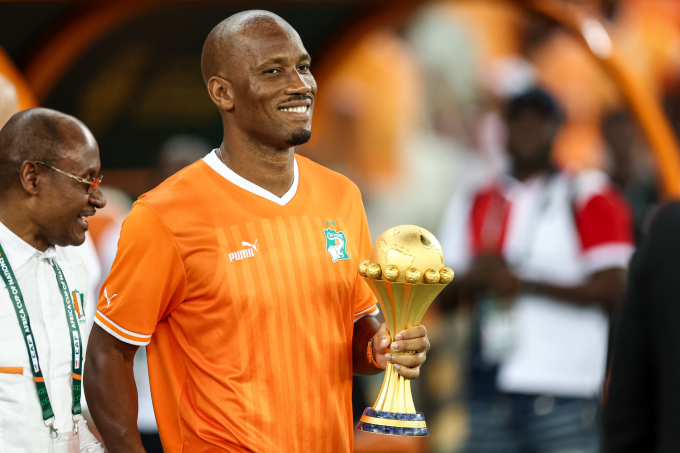
Didier Drogba is not only a football icon but also a national hero.
Known for his strength, composure, and clutch performances, Drogba’s influence extended beyond the pitch.
Early Career
Drogba began in France with Le Mans, Guingamp, and Marseille before joining Chelsea, where he became one of the Premier League’s most feared strikers.
Playing Style
Drogba was a physically dominant forward with precise finishing. His aerial ability, strength, and calm under pressure allowed him to score crucial goals, often in finals.
Achievements
- Champions League winner (2012)
- Premier League titles with Chelsea
- 2× African Footballer of the Year
- Led Ivory Coast to AFCON finals multiple times
Legacy
Drogba’s contributions to peace in Côte d’Ivoire, particularly his plea for a ceasefire in 2005, highlight his unique role as a footballer with societal impact. He inspired unity through sport.
4. Abedi Pele (Ghana) — The Creative Genius
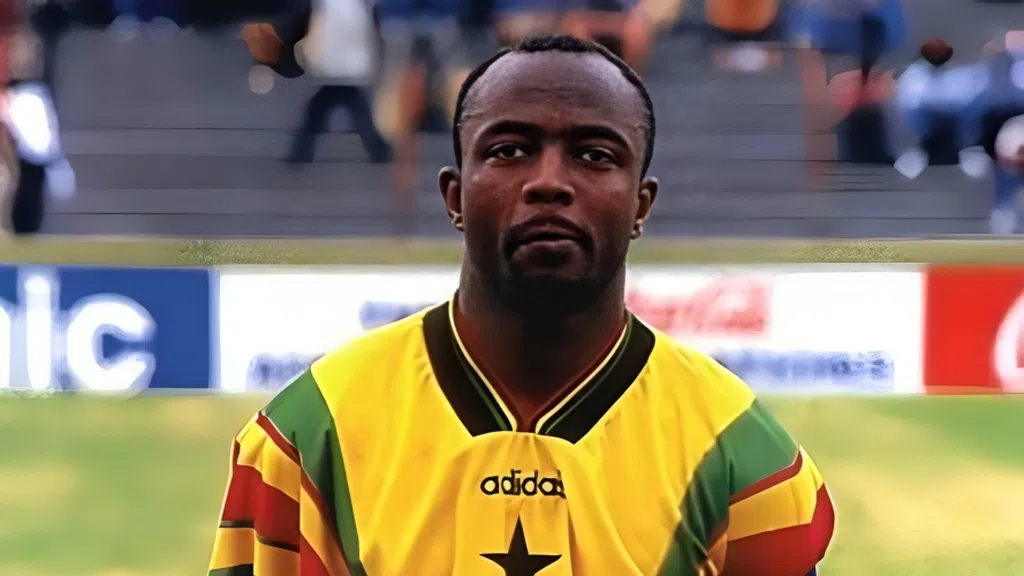
Abedi Ayew, known as Abedi Pele, is one of Africa’s first global midfield maestros.
His vision, technique, and creativity revolutionized African playmaking.
Early Career
Born in Ghana, Abedi Pele played for local clubs before moving to Europe with Marseille, where he won the 1993 European Cup.
Playing Style
Abedi Pele’s dribbling, passing, and tactical intelligence made him a game-changer. He orchestrated attacks and elevated teammates’ performance.
Achievements
- 3× African Footballer of the Year
- Champions League winner with Marseille
- Ghanaian national team legend
Legacy
Pele paved the way for African playmakers to dominate Europe, blending African flair with European tactical discipline.
5. Yaya Touré (Côte d’Ivoire) — The Midfield Powerhouse
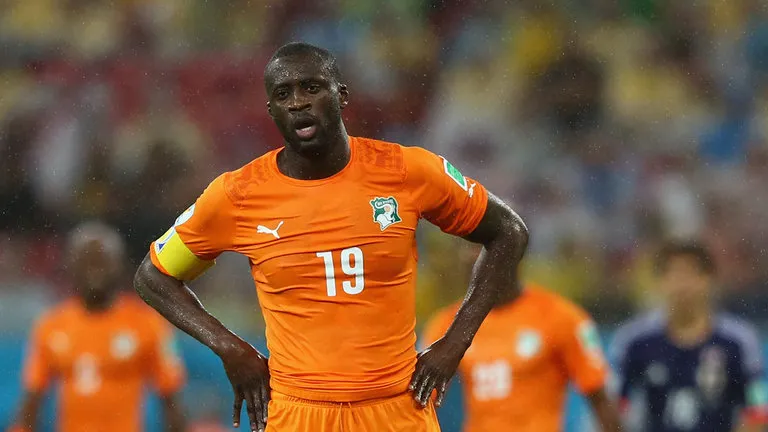
Yaya Touré transformed midfield play with his blend of strength, technique, and intelligence.
Early Career
Born in Bouaké, Ivory Coast, Touré played for Barcelona, Manchester City, and other European clubs. He became pivotal in both club and national team success.
Playing Style
Touré’s ability to drive forward, defend, pass accurately, and shoot from distance made him a complete midfielder. His versatility allowed managers tactical flexibility.
Achievements
- 4× African Footballer of the Year
- Premier League and Champions League titles
- Led Ivory Coast to AFCON success
Legacy
Touré inspired a generation of African midfielders, showing that physical dominance and technical skill can coexist at elite levels.
6. Roger Milla (Cameroon) — The Joyful Pioneer
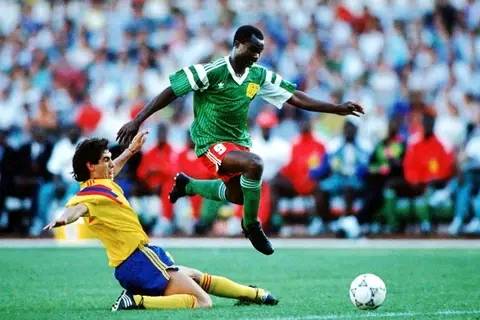
Roger Milla captured global attention at the 1990 World Cup, becoming a symbol of African football exuberance.
Career Highlights
Milla’s signature corner-flag dances and memorable goals helped Cameroon reach the World Cup quarter-finals for the first time.
Achievements
- Oldest World Cup goalscorer at 42
- AFCON winner
- Global recognition for flair and personality
Legacy
Milla made Africa’s style of football celebrated worldwide, combining skill with joyous expression.
7. Nwankwo Kanu (Nigeria) — The Elegant Striker
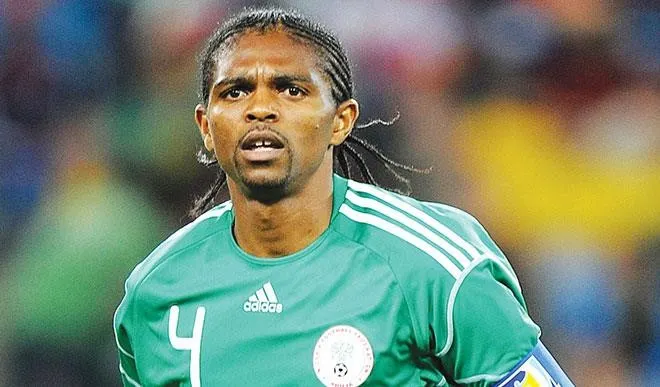
Kanu’s career was defined by grace, creativity, and intelligence.
Career
- Played for Ajax, Arsenal, and Portsmouth
- Olympic Gold Medalist (1996)
- Champions League winner
Legacy
Kanu’s blend of elegance and power set him apart and inspired African strikers globally.
8. Mohamed Salah (Egypt) — Africa’s Modern Superstar
Salah represents the new era of African football dominance.

Career
- Success at Liverpool, Roma, and Chelsea
- Premier League Golden Boot winner
- African Footballer of the Year
Legacy
Salah combines skill, professionalism, and global influence, inspiring young African players to aim high.
9. Sadio Mané (Senegal) — The National Hero

Mané’s journey from Senegalese grassroots to global stardom embodies perseverance.
Career Highlights
- Premier League and Champions League titles
- AFCON winner
- Senegal’s World Cup standout
Legacy
Mané exemplifies humility, dedication, and national pride, inspiring African youth to excel globally.
10. Jay-Jay Okocha (Nigeria) — The Magician
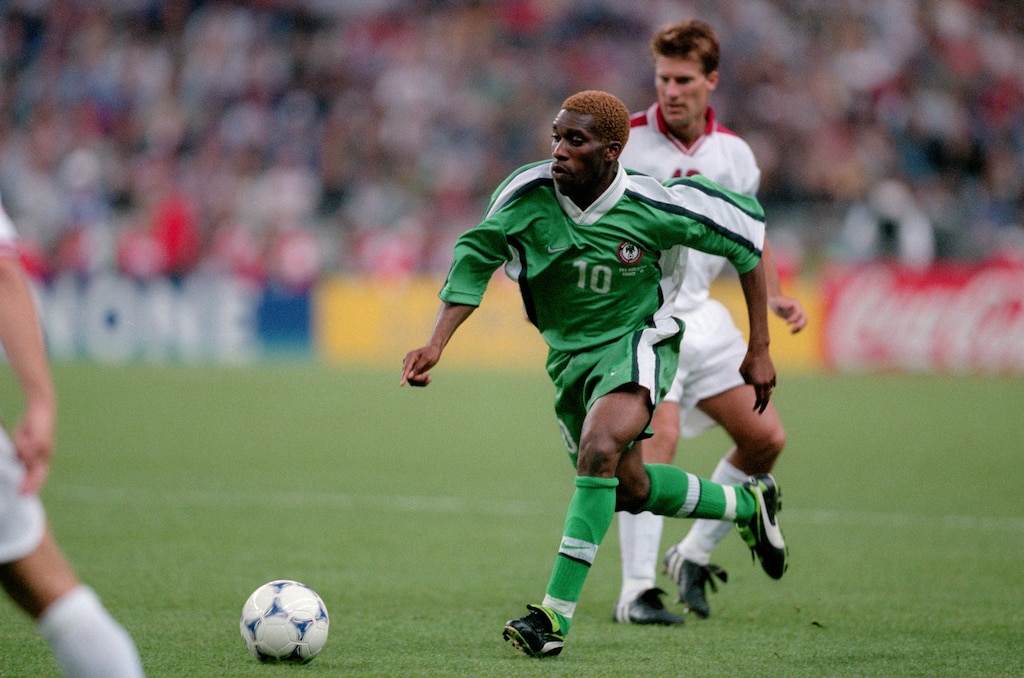
Okocha’s flair and creativity made him a fan favorite worldwide.
Career Highlights
- Starred for Bolton Wanderers, PSG, and Nigeria
- AFCON winner
- Known for mesmerizing dribbles and assists
Legacy
Okocha inspired a generation to embrace skill and creativity over pure power.
Honourable Mentions
Other players who shaped African football:
- Rabha Madjer (Algeria)
- El Hadji Diouf (Senegal)
- Essam El-Hadary (Egypt)
- Patrick Mboma (Cameroon)
- Asamoah Gyan (Ghana)
- Kalusha Bwalya (Zambia)
- Riyad Mahrez (Algeria)
- Tshabalala (South Africa)
- Michael Essien (Ghana)
These players contributed to Africa’s growth in global football, leaving lasting legacies.
African Football’s Enduring Legacy
African football legends have:
- Elevated continental football globally
- Inspired youth academies and talent pipelines
- Shaped cultural identity and national pride
- Contributed to social unity and political awareness
From Milla to Salah, these icons transformed African football into a global force.
Conclusion
Africa’s football history is written by legends who dared, inspired, and conquered.
Their influence stretches beyond trophies to cultural and social transformation.
The continent’s football legacy continues, powered by these icons and the next generation they inspire.